
For more than 170 years, First Church and Seattle have grown up together. This illustrated timeline is drawn from our History Wall and the church archives — year by year, from a log-cabin sermon in 1853 to today. For the full story in prose, see our History page.
1853
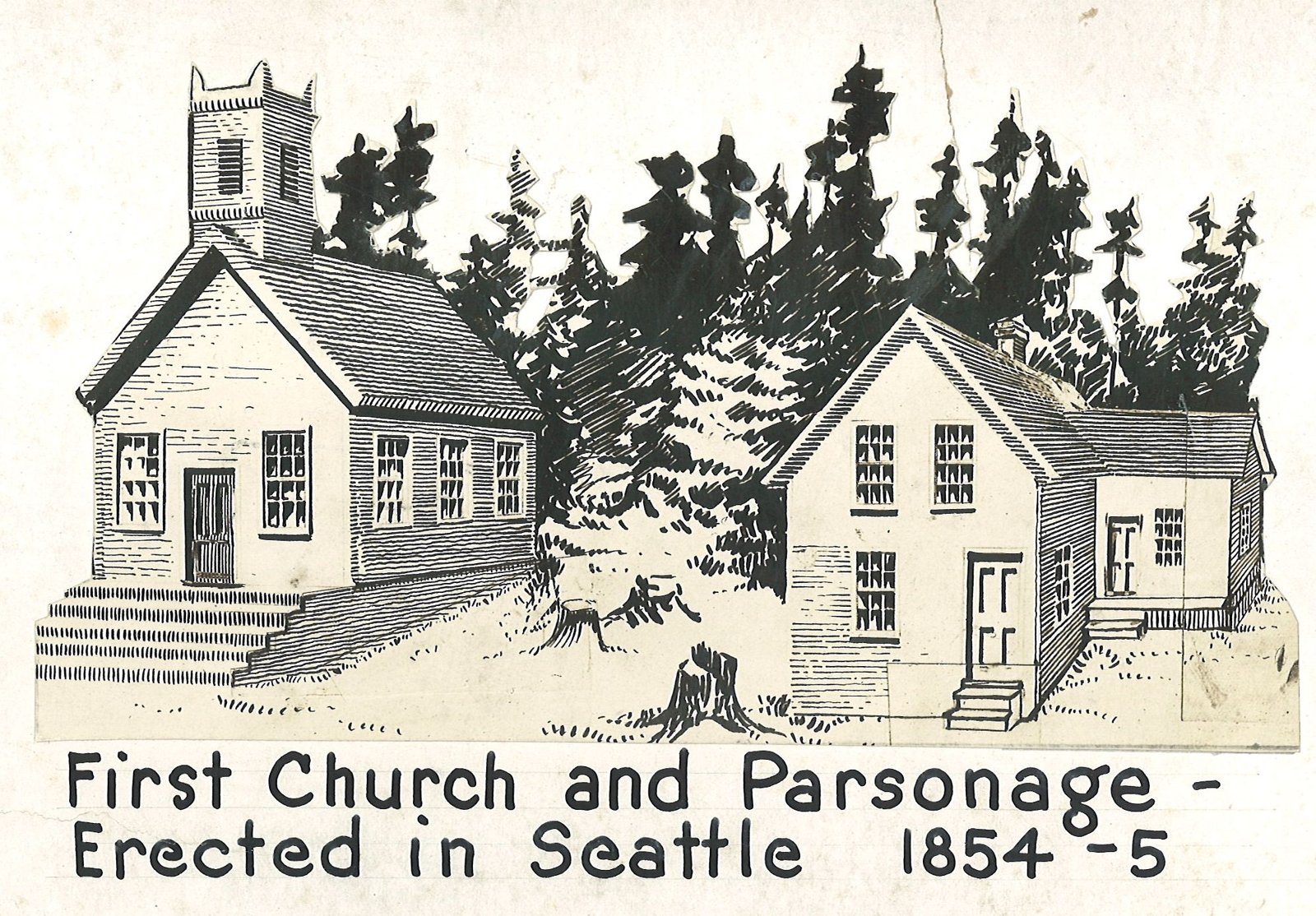
Rev. David E. Blaine held Seattle’s first Methodist worship service on December 4, 1853, making First Church the first and longest-existing church in the city. Arthur and Mary Denny, Catharine Blaine, and John Nagle were the four founding members. The first buildings — the Blaine parsonage (1854) and the church itself (1855) — rose along Second Avenue on land donated by Carson Boren. Catharine Paine Blaine, who at 18 had signed the 1848 Declaration of Sentiments at Seneca Falls, became Seattle’s first schoolteacher.
1856
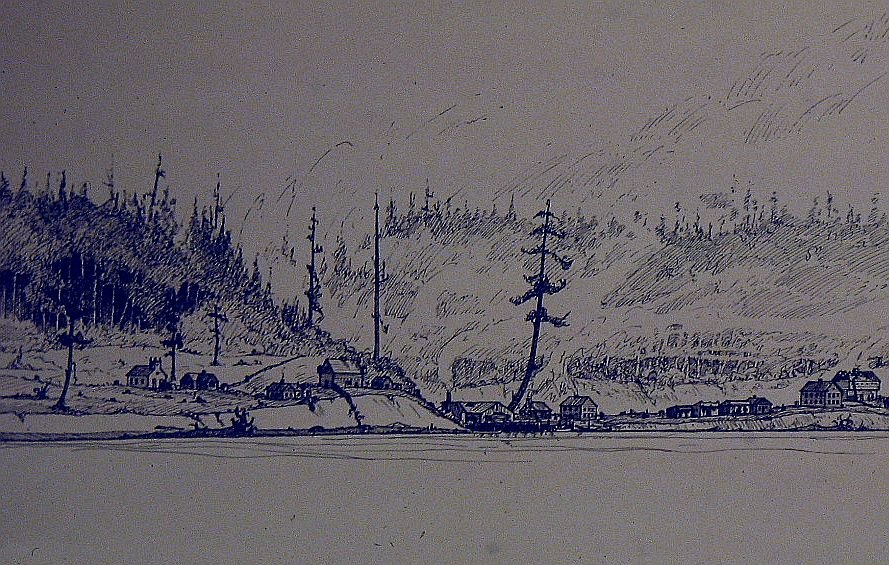
The day-long skirmish known as the “Battle of Seattle” swept the pioneer town in January 1856; thanks to advance warning from members of Chief Sealth’s tribe, the U.S. Navy sloop-of-war Decatur arrived in Elliott Bay to fend off the raid. The young church building was struck by bullets but survived. The Blaines departed for Portland with their infant son soon after.
1860
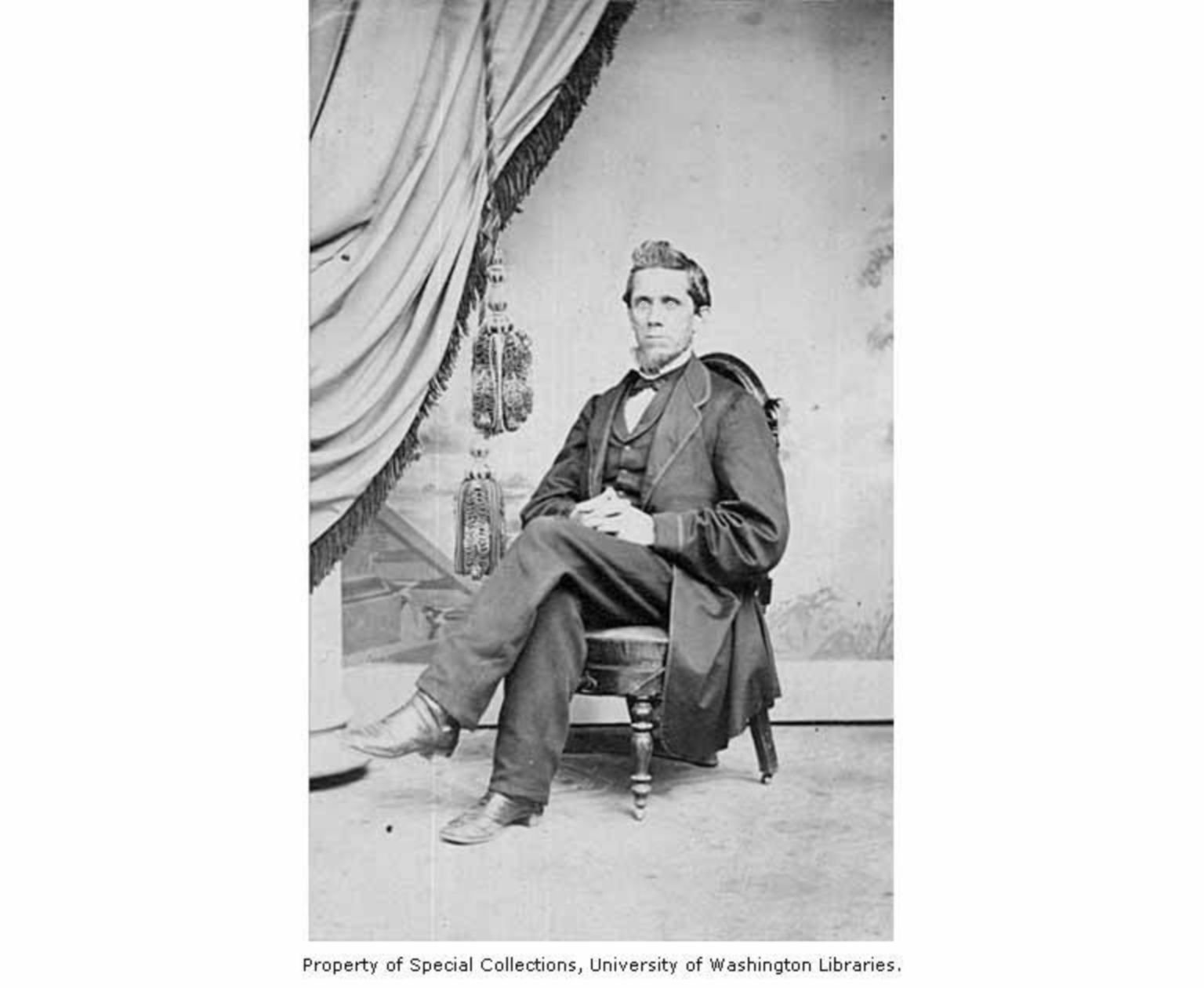
Rev. Daniel Bagley, a popular Methodist Protestant preacher, filled the pulpit in early 1860 — and when he left to found the Methodist Protestant “Little Brown Church,” he took all but six members with him. Bagley, together with founding member Arthur Denny, went on to help establish the future University of Washington.
1874
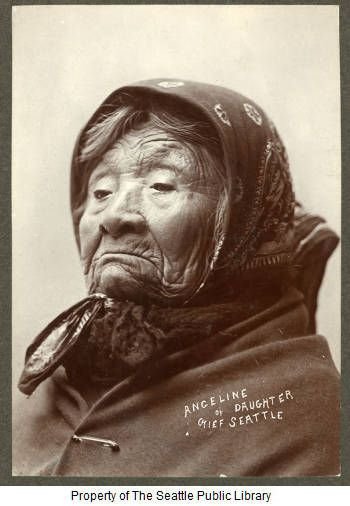
With the arrival of Rev. Albert Atwood in 1874, church membership rose almost weekly. Rev. Atwood employed Kick-Is — called “Princess Angeline” by white settlers — the daughter of Chief Seattle, in the parsonage kitchen.
1878
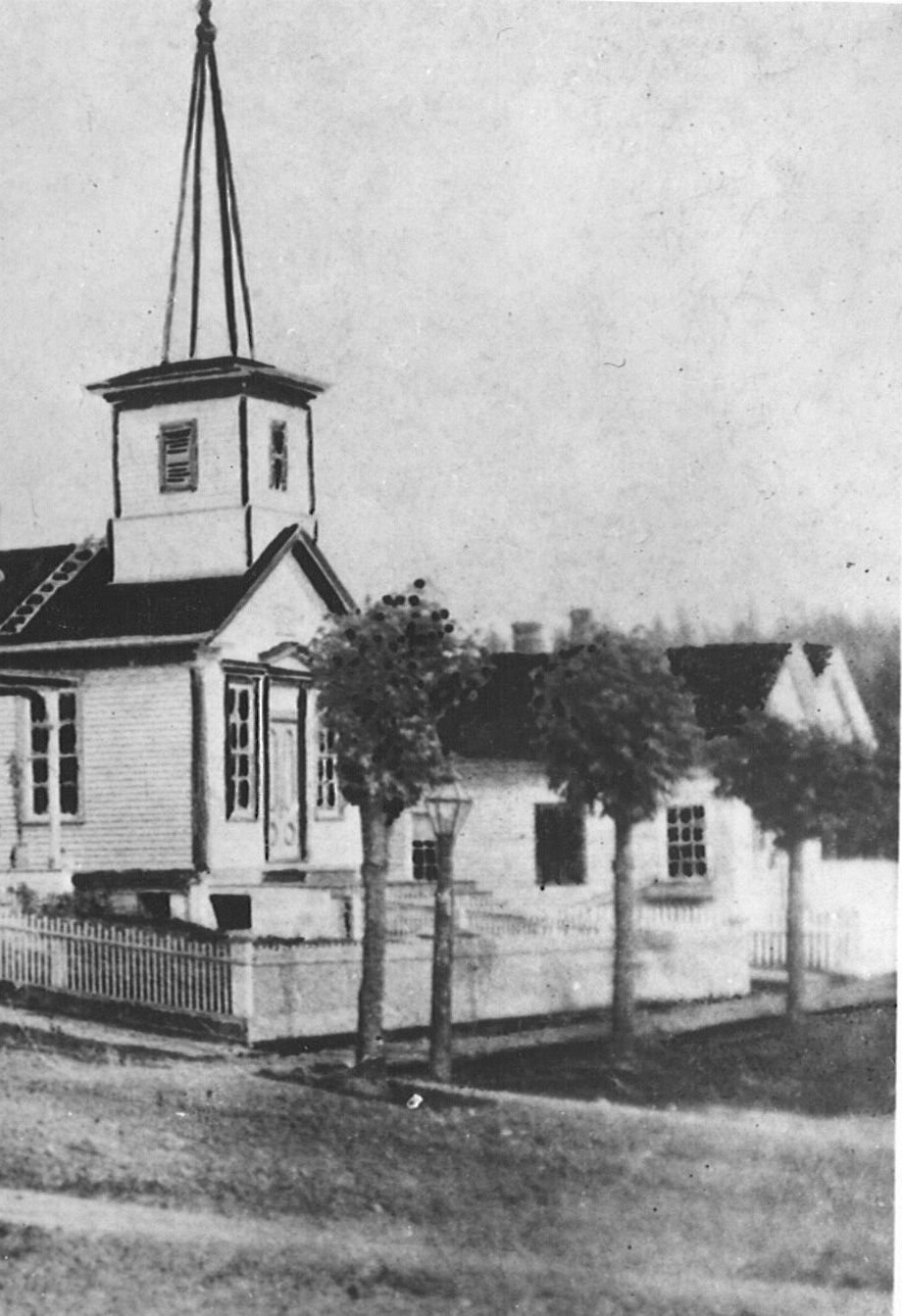
The Little White Church carried a mortgage — so the women of the church organized a sightseeing tour, inviting San Franciscans to see Seattle and Victoria, and raised the $900 needed to clear it.
1883
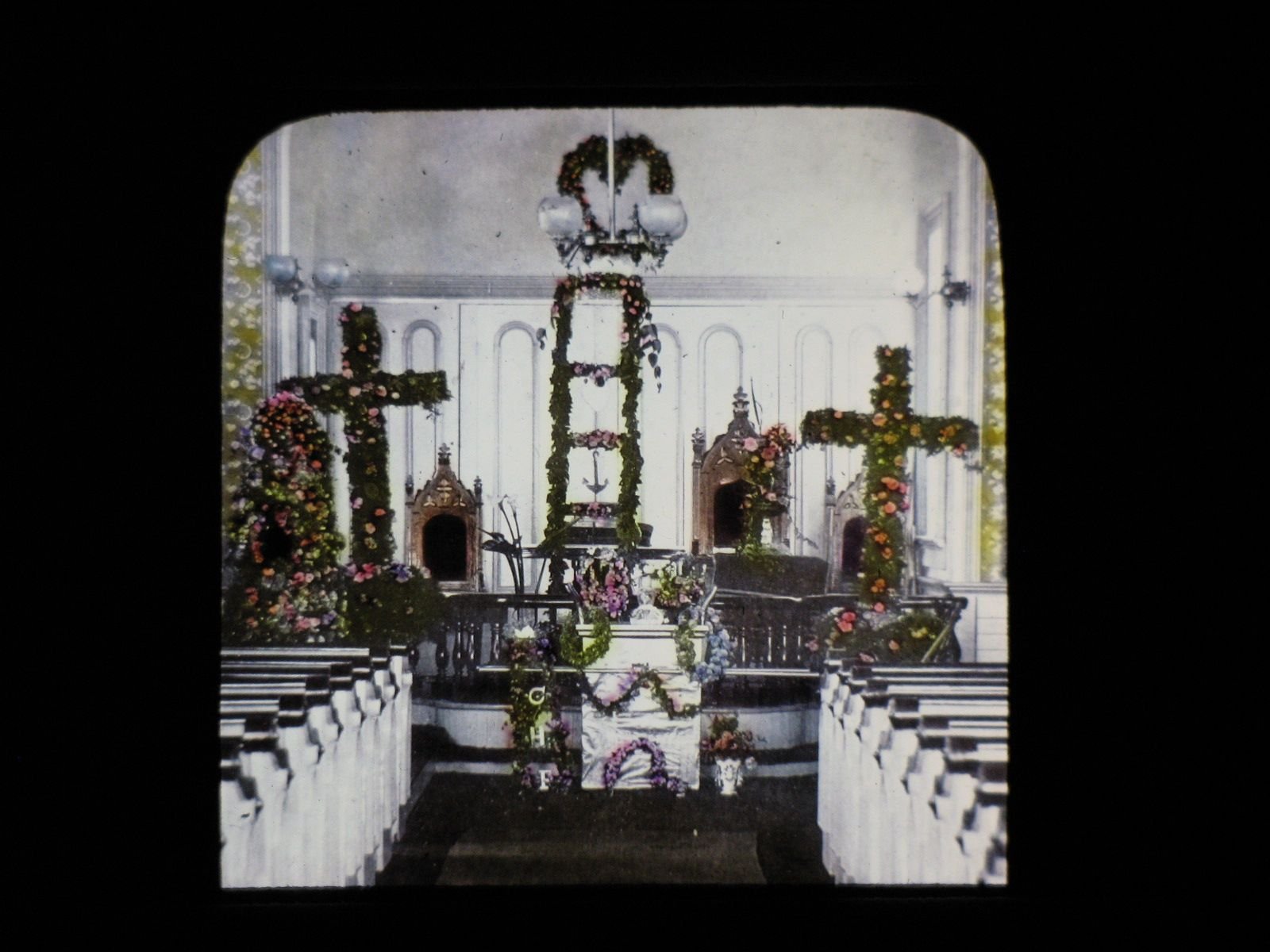
Pastor Rev. William S. Harrington introduced Frances Willard of the Women’s Christian Temperance Union at her 1883 Seattle speaking engagement; founding local WCTU member Harriet Parkhurst lived next door to the church. The Women’s Foreign Missionary Society, formed at First Church in the same era, raised money for schools, hospitals, and missions in China, Korea, and around the globe.
1885
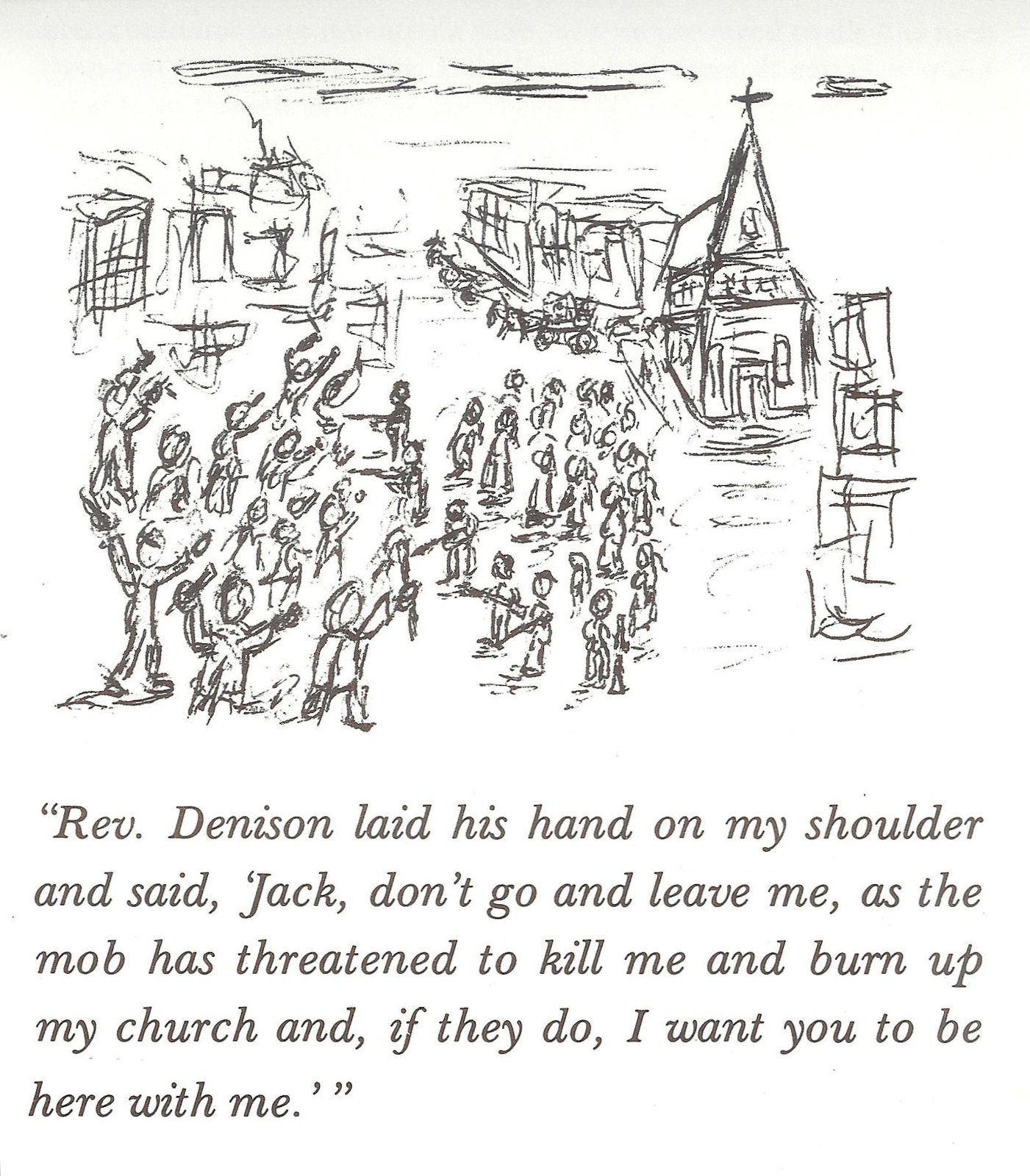
During the anti-Chinese riots of November 1885, the church was threatened by the mob because of its large mission school for Chinese immigrants. Pastor Rev. John Denison, circuit rider A. J. “Brother Mack” McNemee, and Civil War veteran A. J. Smith guarded the church for three days and two nights until order was restored.
1888
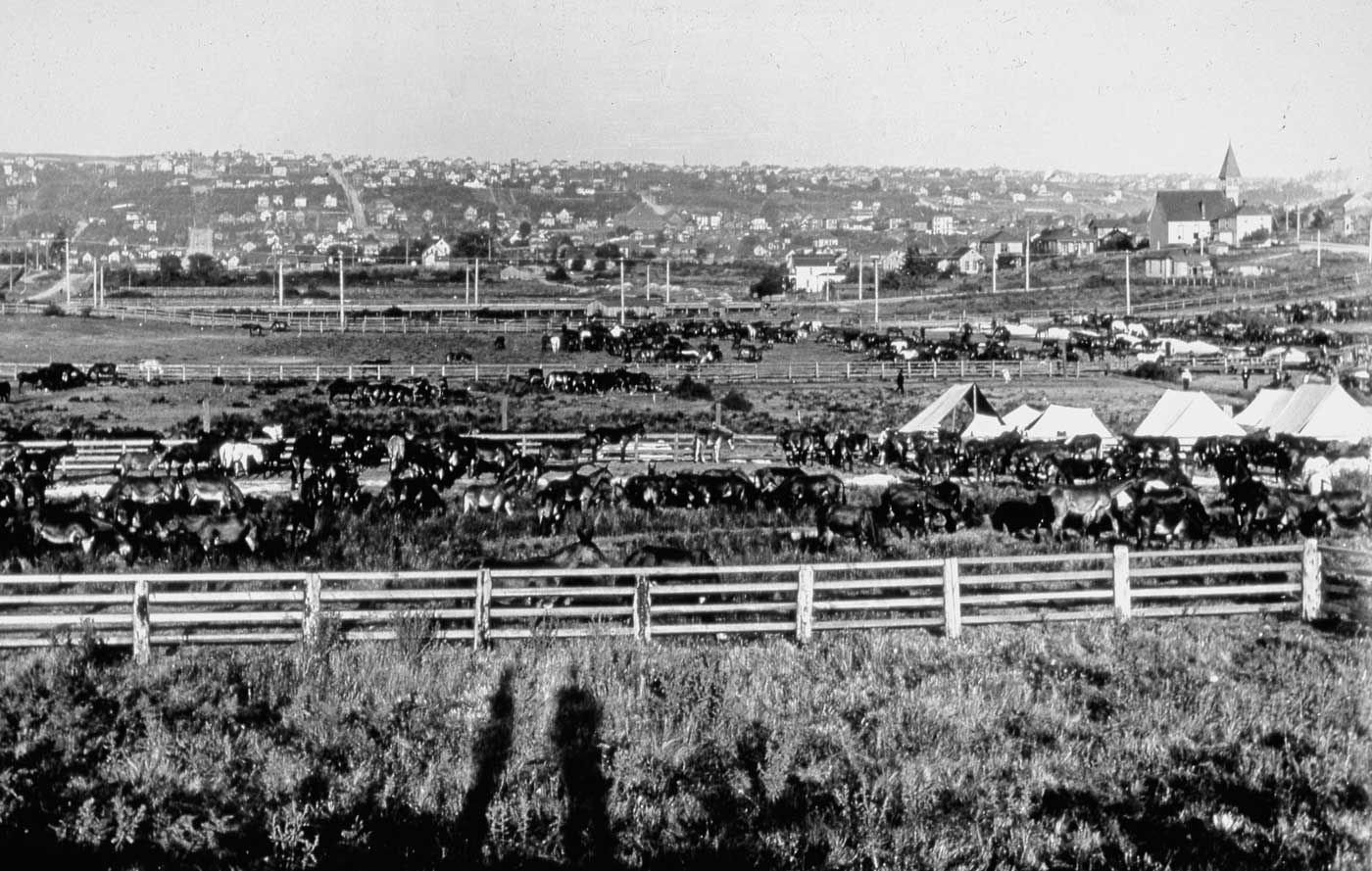
The First Evangelical United Brethren Church of Seattle — a German-American congregation that would merge with First Methodist in 1967 — held its first worship service, in German, on July 29, 1888. Rev. August Ernst founded the church with 18 members that September. Its first building stood at the present-day site of Seattle Center.
1889
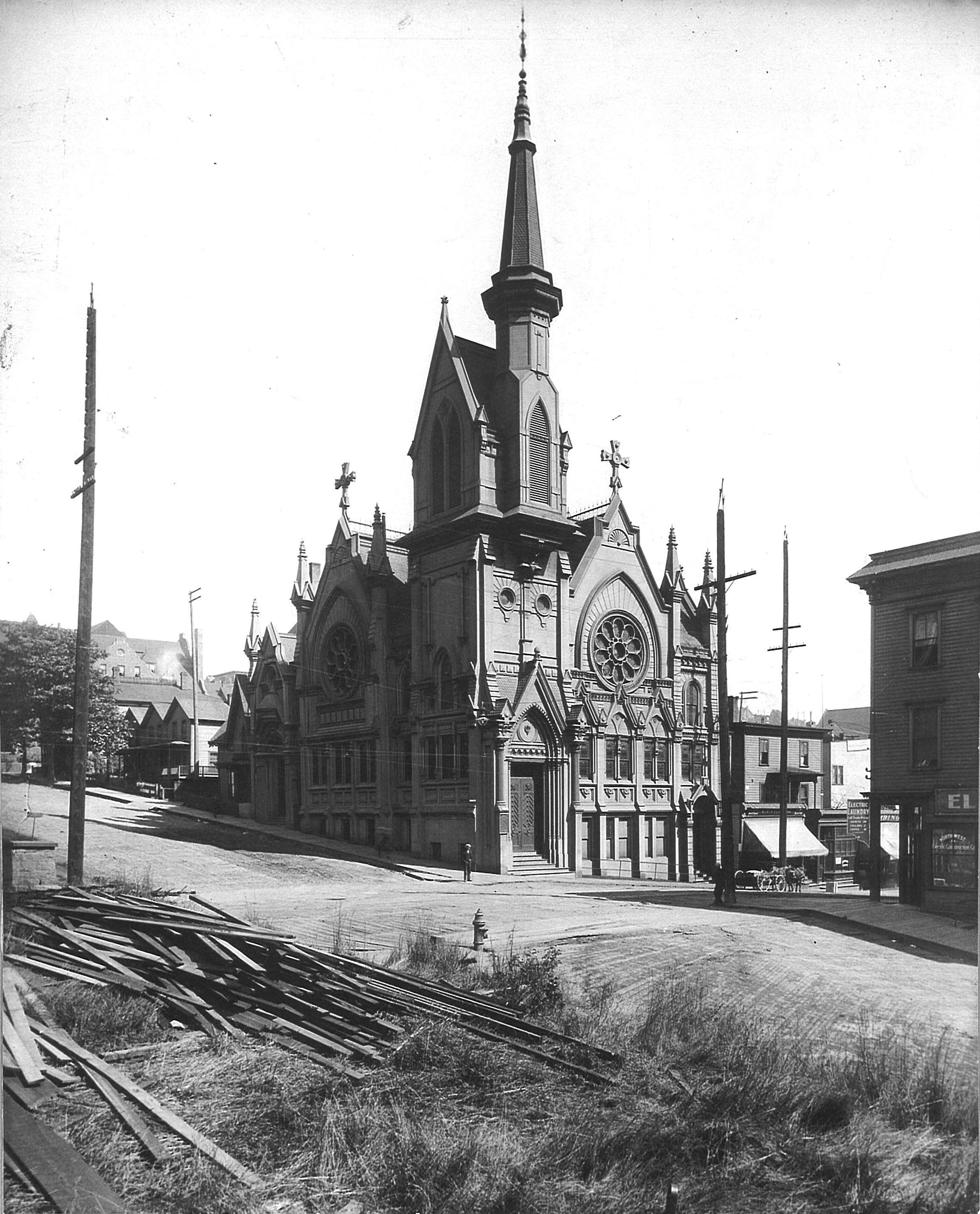
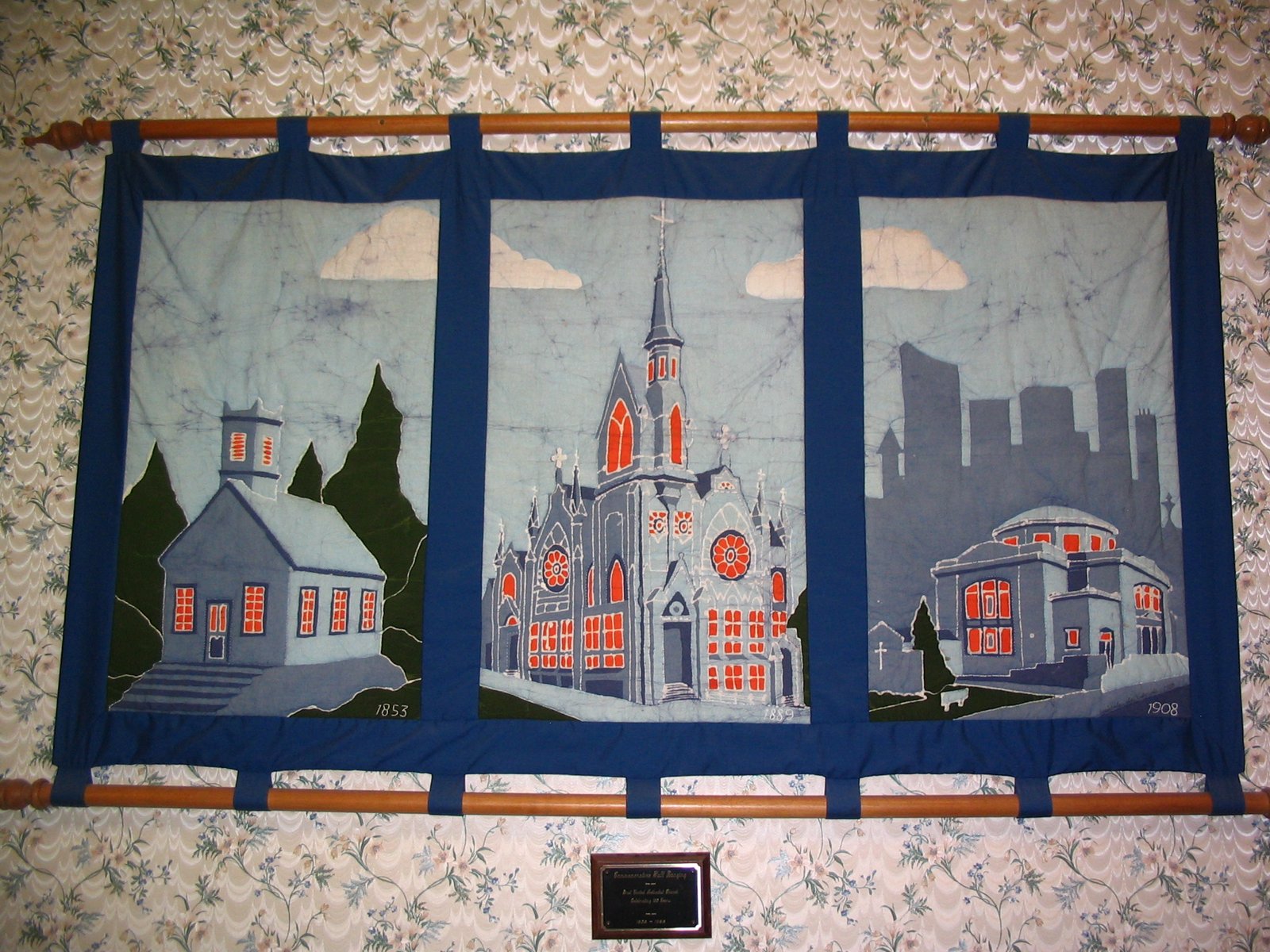
Two months after the Great Seattle Fire destroyed 125 acres of the city — and in the same year Washington achieved statehood — First Church opened the doors of its grand new Gothic Revival building at Third & Marion. The church had been spared, standing just three blocks outside the burned district.
1892
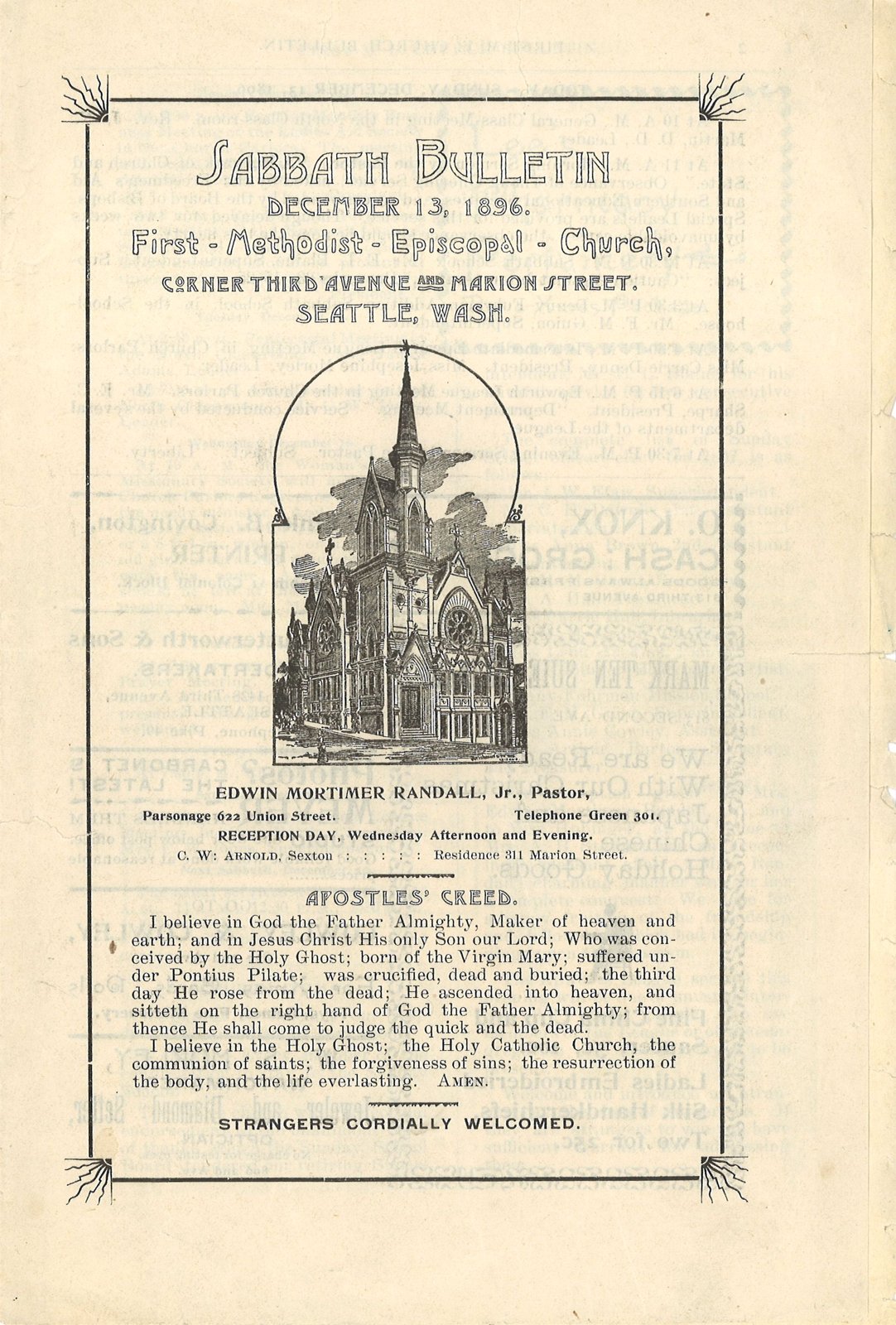
The Epworth League, the national young people’s society of the Methodist Episcopal Church, flourished with social, spiritual, and intellectual activities. A serious economic downturn beginning in 1893 brought financial struggle for the church and its parishioners.
1897
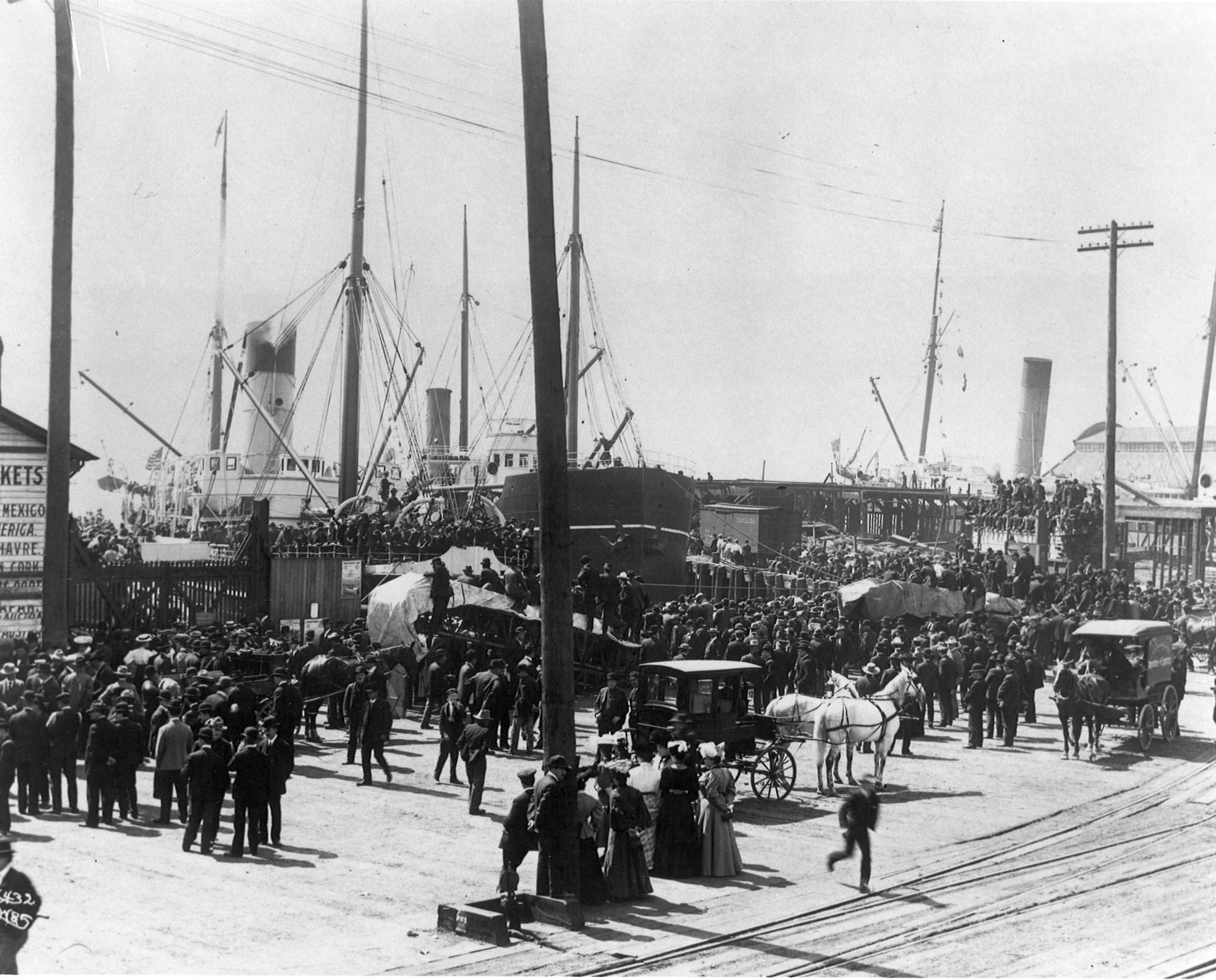
The steamer Portland arrived in Seattle carrying a ton of gold, igniting the Klondike Gold Rush. First Church member T. S. Lippy, nicknamed “The Eldorado King,” was among its success stories — he and his wife Salome became generous supporters of the church and helped found Seattle General Hospital.
1903
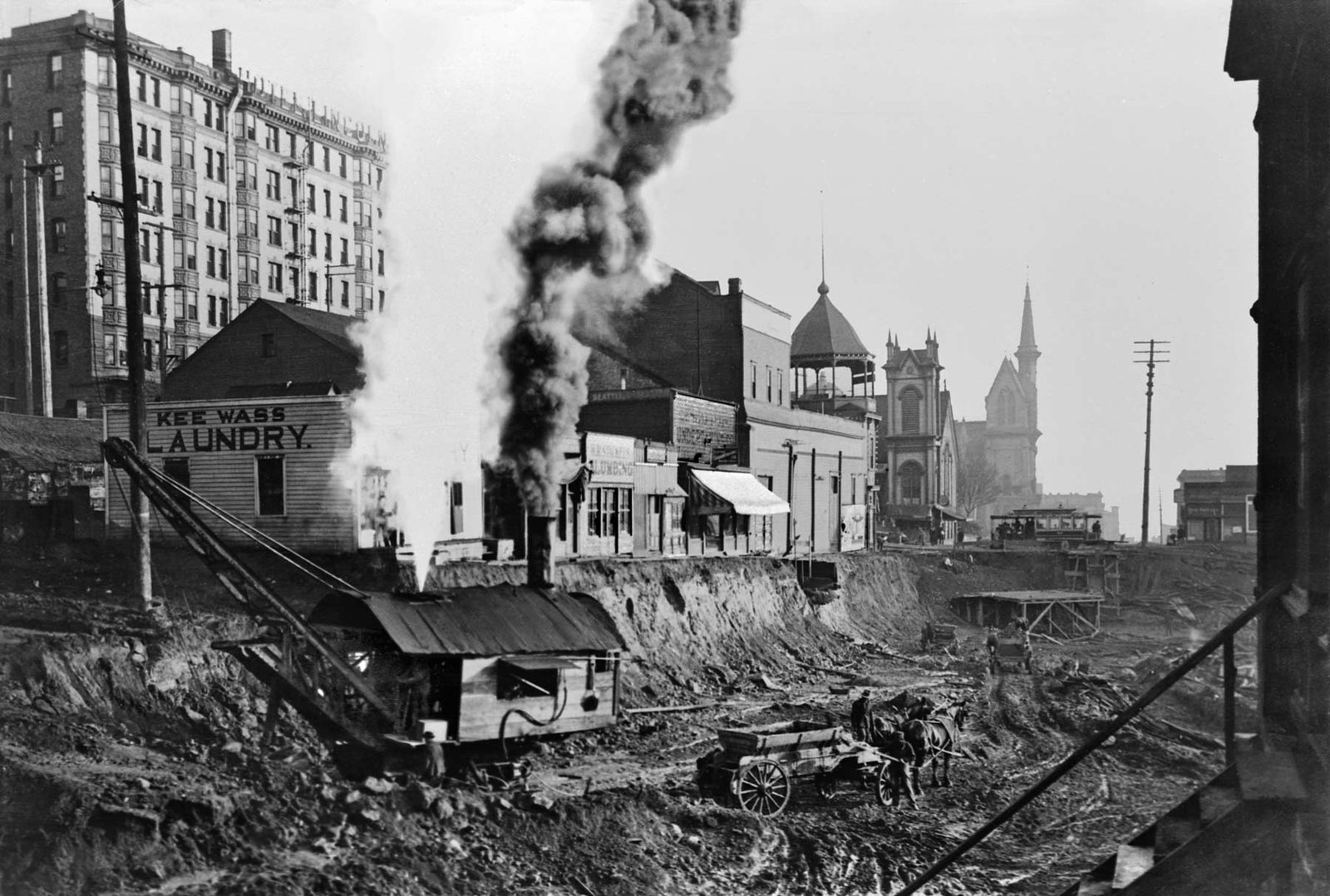
Church membership rose to 1,022, and the thriving congregation fielded both men’s and women’s Temple Choruses. Meanwhile, the city’s regrades of Third and Fourth Avenues pushed church leaders to sell the Third & Marion property.
1905
First Church broke ground for a new sanctuary on a lot purchased at Fifth & Marion. The building was designed in the Beaux Arts style by the architectural firm of Schack and Huntington.
1907
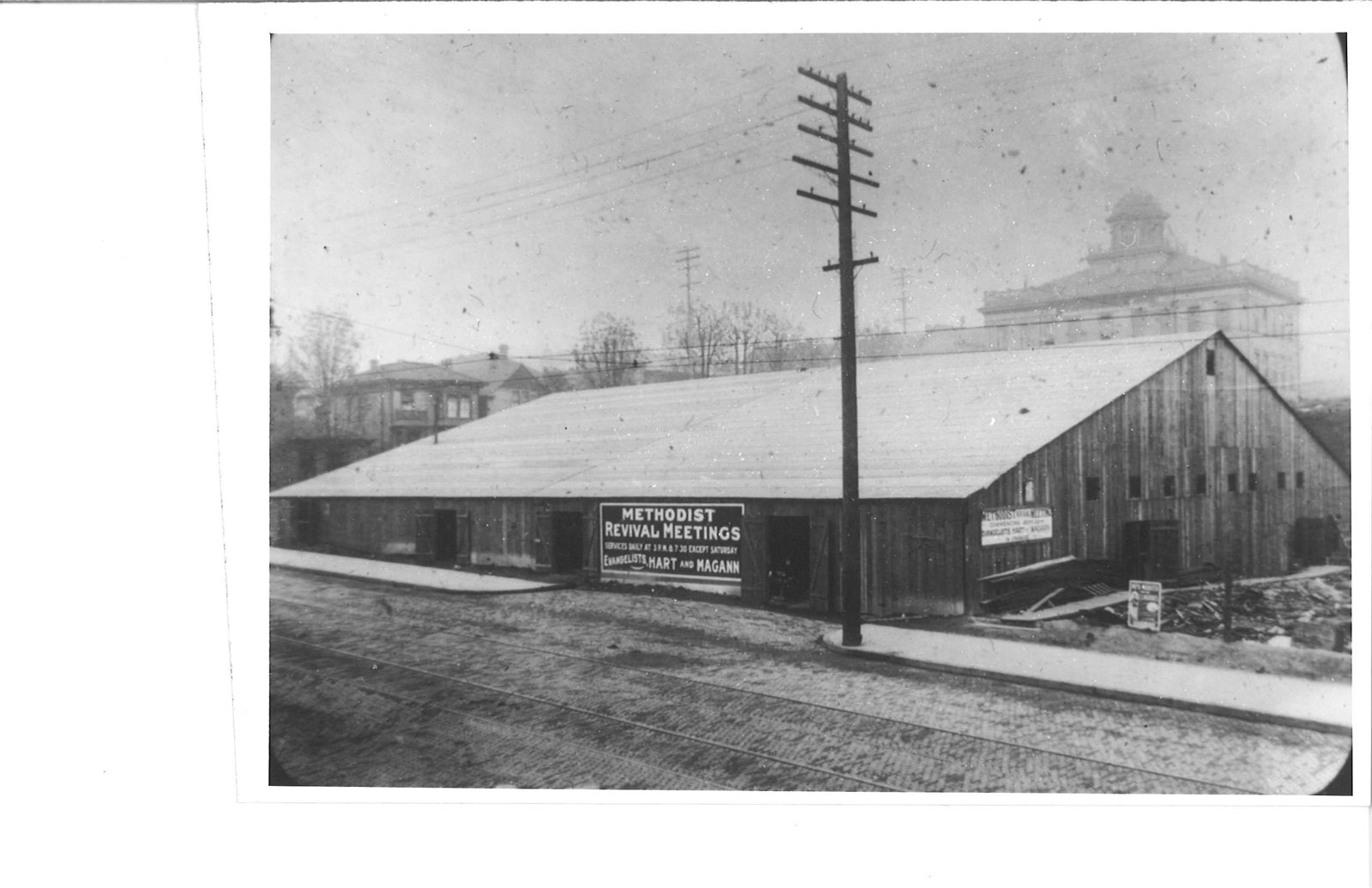
While the Fifth & Marion sanctuary was under construction, the congregation worshiped at the old Grand Opera House and in a sawdust-floored pavilion on Fourth Avenue. The same year, the EUB congregation moved to a new church at Second Avenue North and Valley Street.
1908
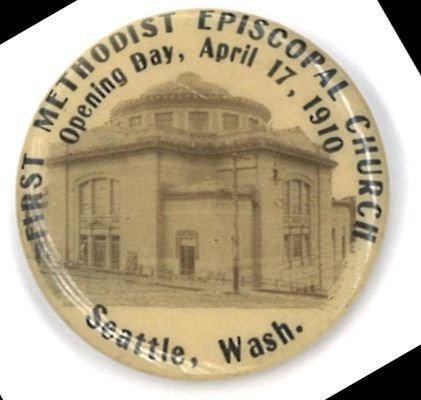
The congregation moved into its new home at Fifth Avenue and Marion Street, worshiping in the lower level until the domed sanctuary above was complete. The finished sanctuary opened on April 17, 1910.
1910
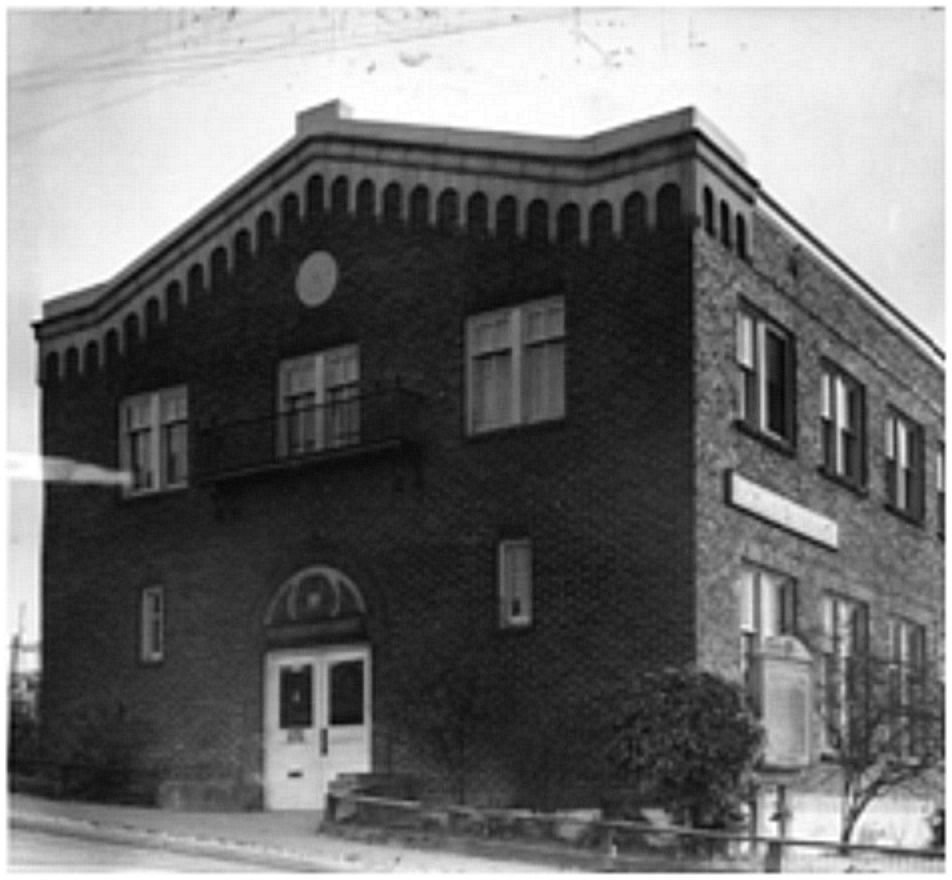
Two young women — a teacher and a nurse — saw the need for a settlement house serving children and families in the Rainier Valley, and secured their first funding from First Church. Their work grew into the Atlantic Street Center, which in 1990 honored First Church with its Rev. Willie Jackson, Jr. Outstanding Religious Service Award.
1911
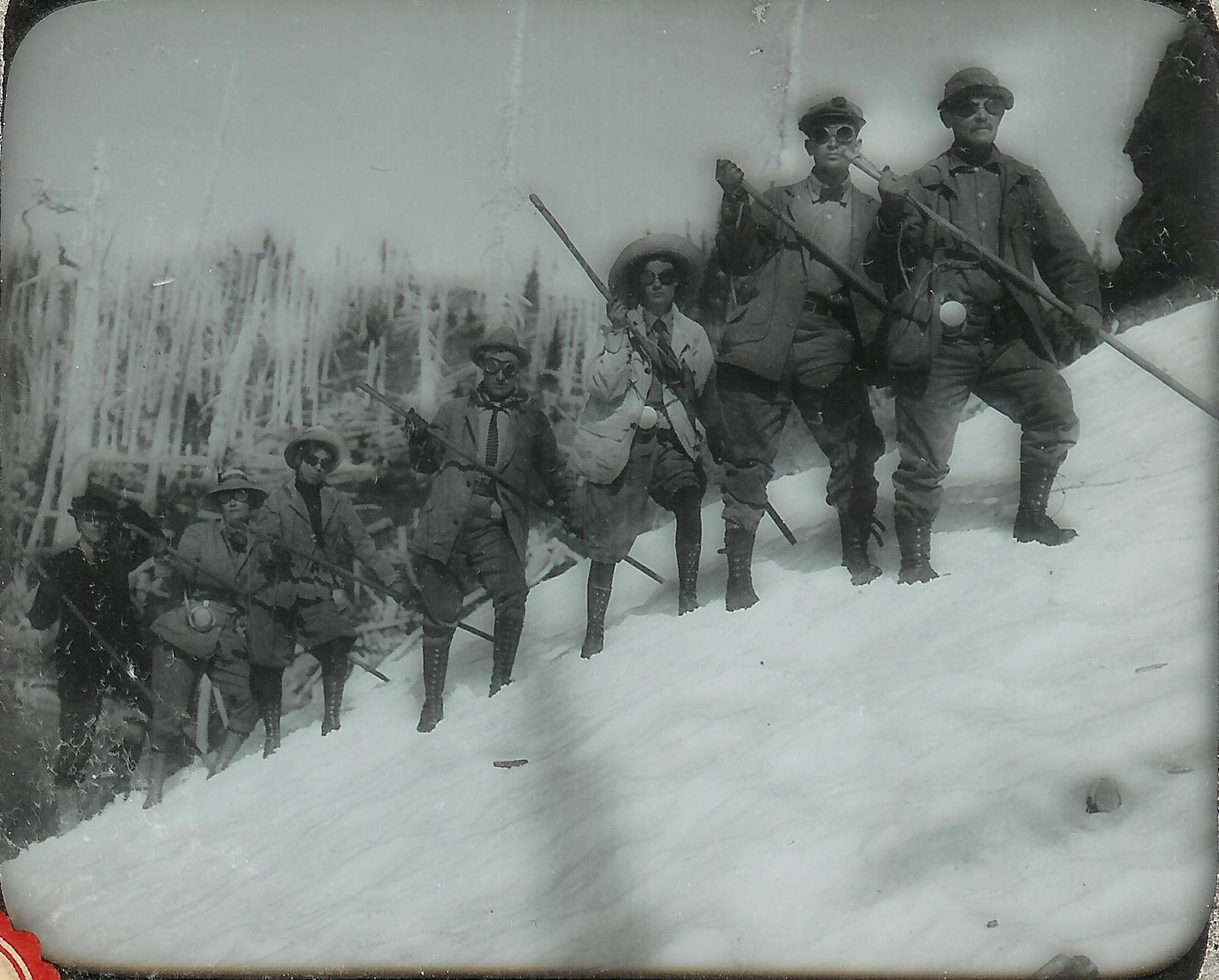
The Catharine Blaine Home opened on 11th Avenue, providing housing for Japanese “picture brides” arriving in Seattle who needed assistance — expanding the work Rev. Yoshioka had begun. The same year, seven First Church members, including pastor Rev. Adna Leonard, joined the Mountaineers’ month-long ascent of Mt. Adams.
1915
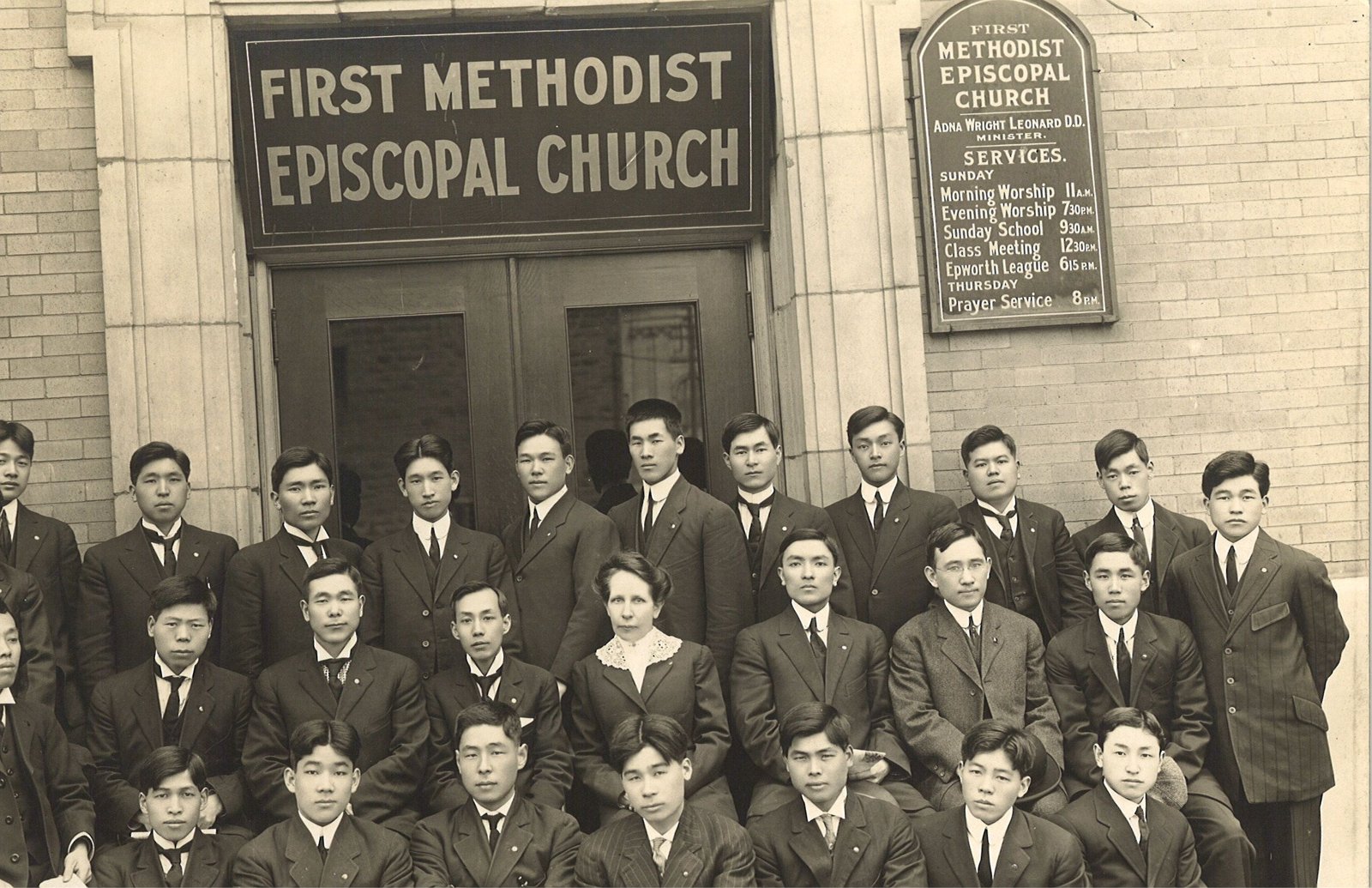
Anti-Japanese sentiment ran strong in Seattle, but First Church lent its support to its Japanese neighbors. The Japanese Sunday School class, led by Mrs. Hayward, returned the generosity by raising $180 to help pay off a church debt. Member Edward Linn Blaine had signed the original letter of incorporation for the Japanese Methodist Episcopal Church.
1916
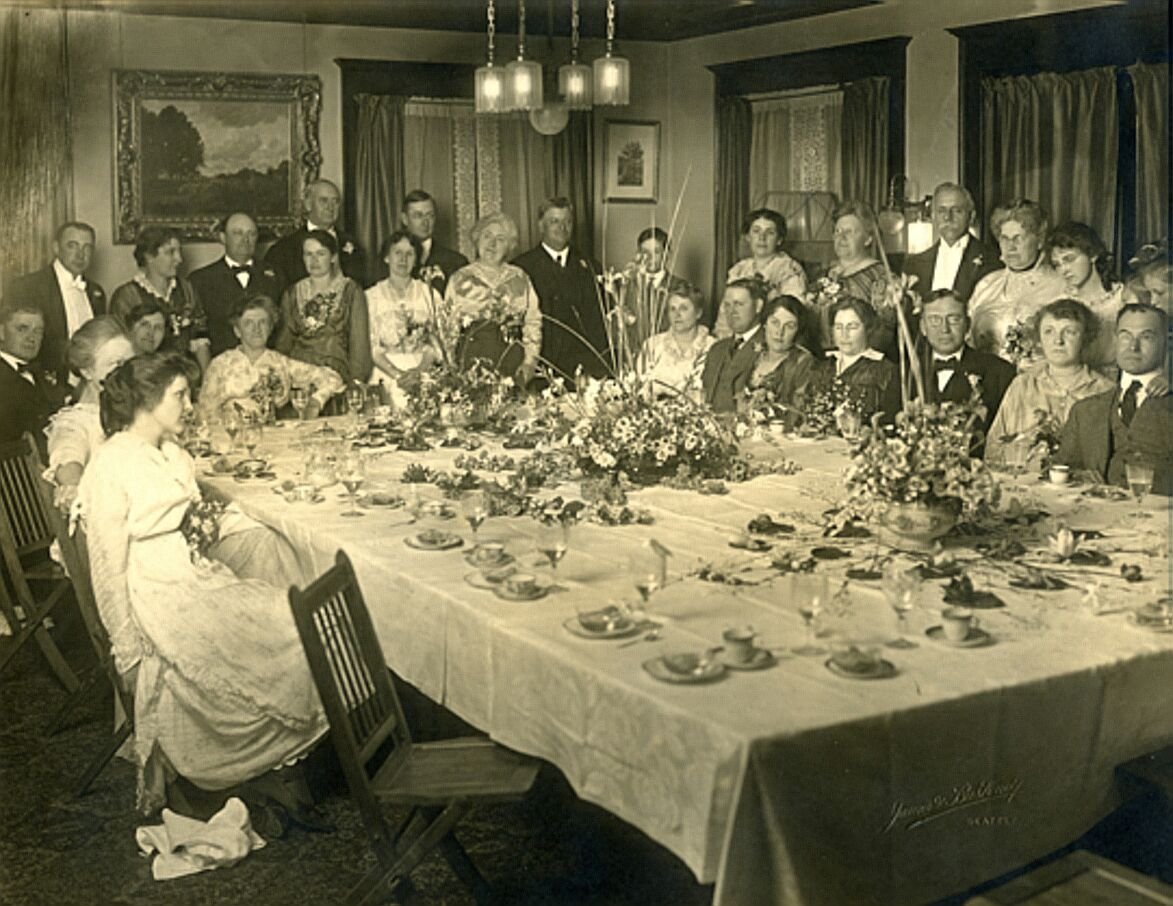
First Church’s much-loved senior pastor, Rev. Adna Leonard, was elected to the episcopacy, celebrated with an elegant “bishop’s dinner” in his honor.
1918
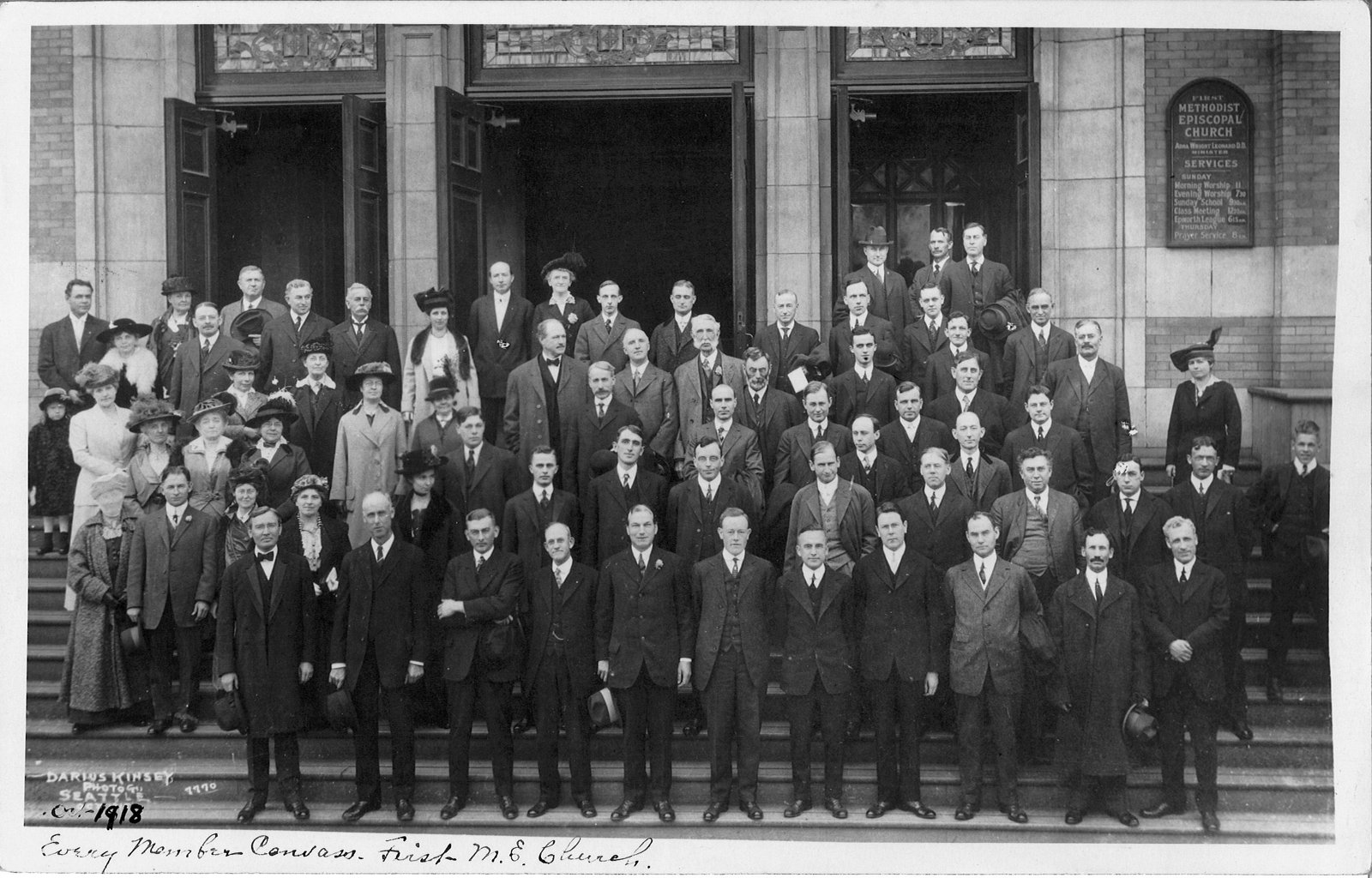
During the Great War, the church conducted an Every Member Visitation, the women became deeply involved in American Red Cross work, and Sunday School superintendent Harry Wilson spent a year with the YMCA in France, showing stereopticon slides and leading songfests for the troops.
1919
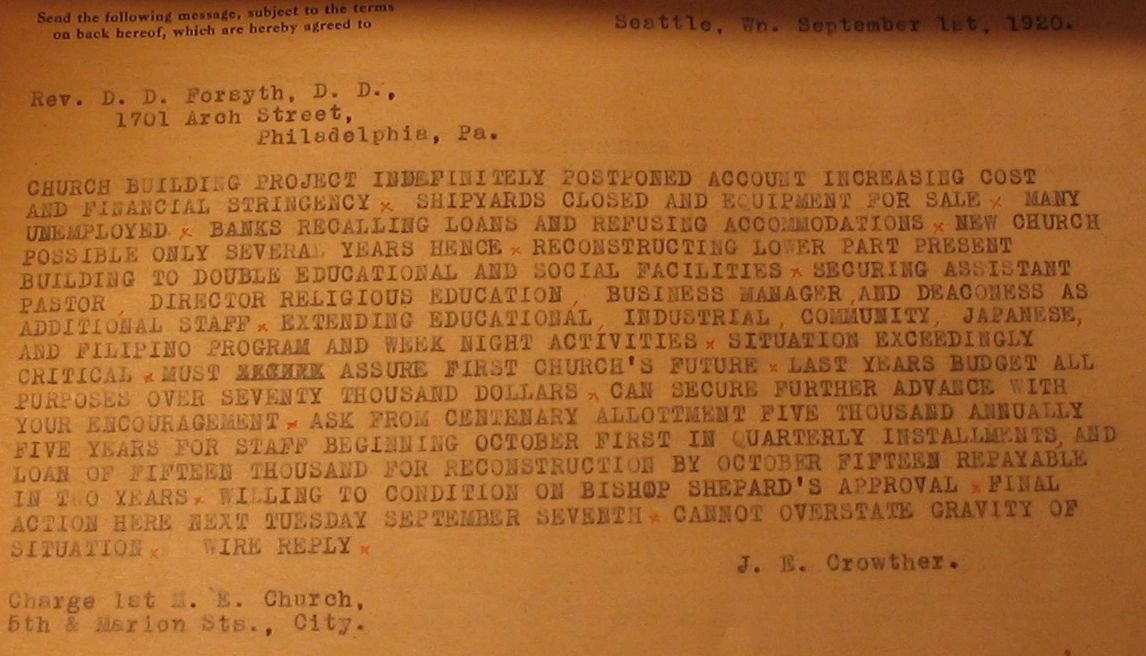
The historic Seattle General Strike — 35,000 shipyard workers, joined by 25,000 union workers — ground commerce to a halt and brought difficult financial times. The church borrowed to keep its ministries afloat, including Bible studies for Japanese and Filipino immigrants and a popular “Junior Church” serving over a hundred children.
1923
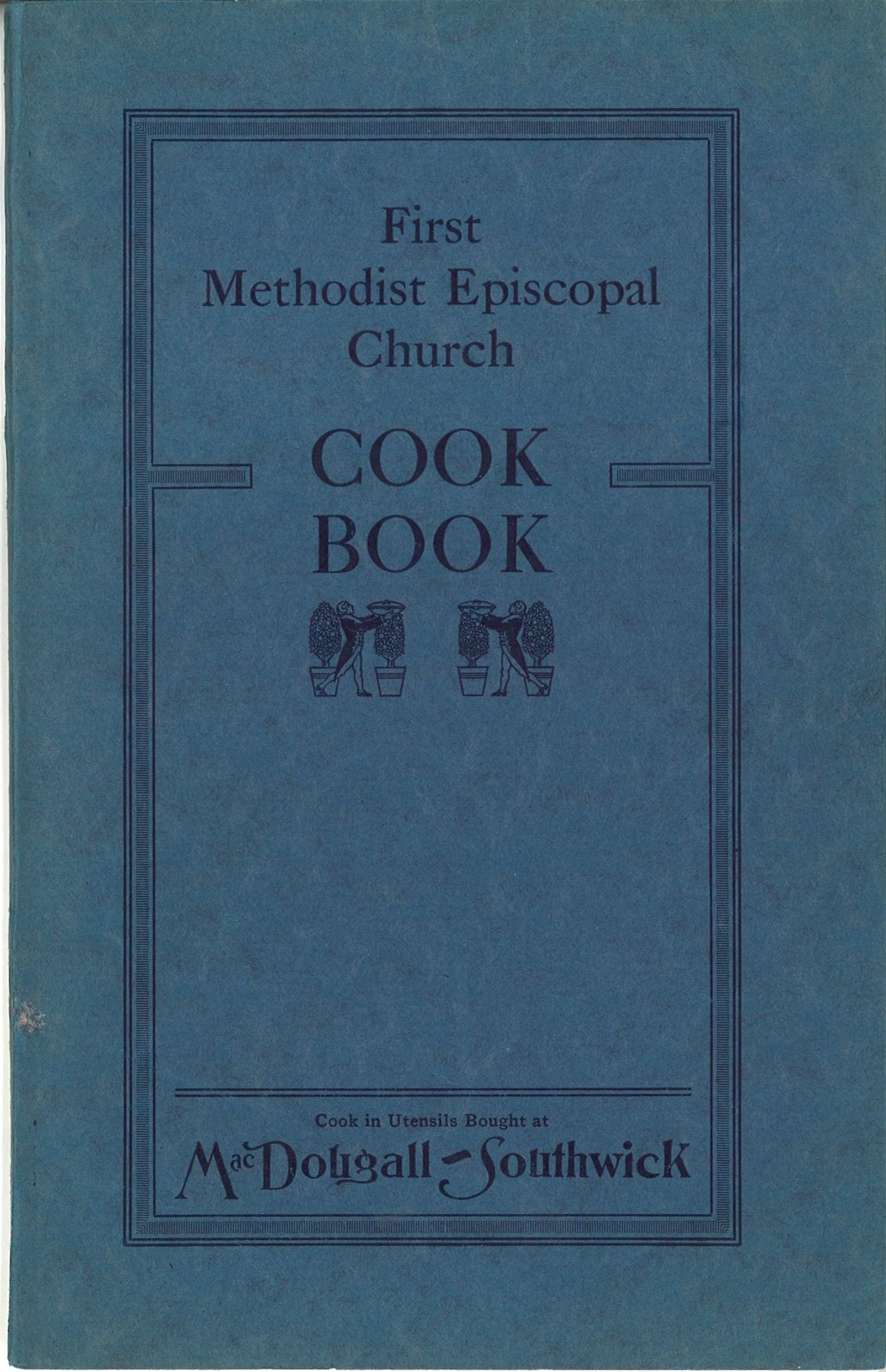
The women of First Church published a church cookbook and held bazaars to furnish the new building — part of decades of fundraising that supported San Francisco earthquake relief, the Crittenton Home, Seattle General Hospital, the Ruth School for Girls, and much more.
1925
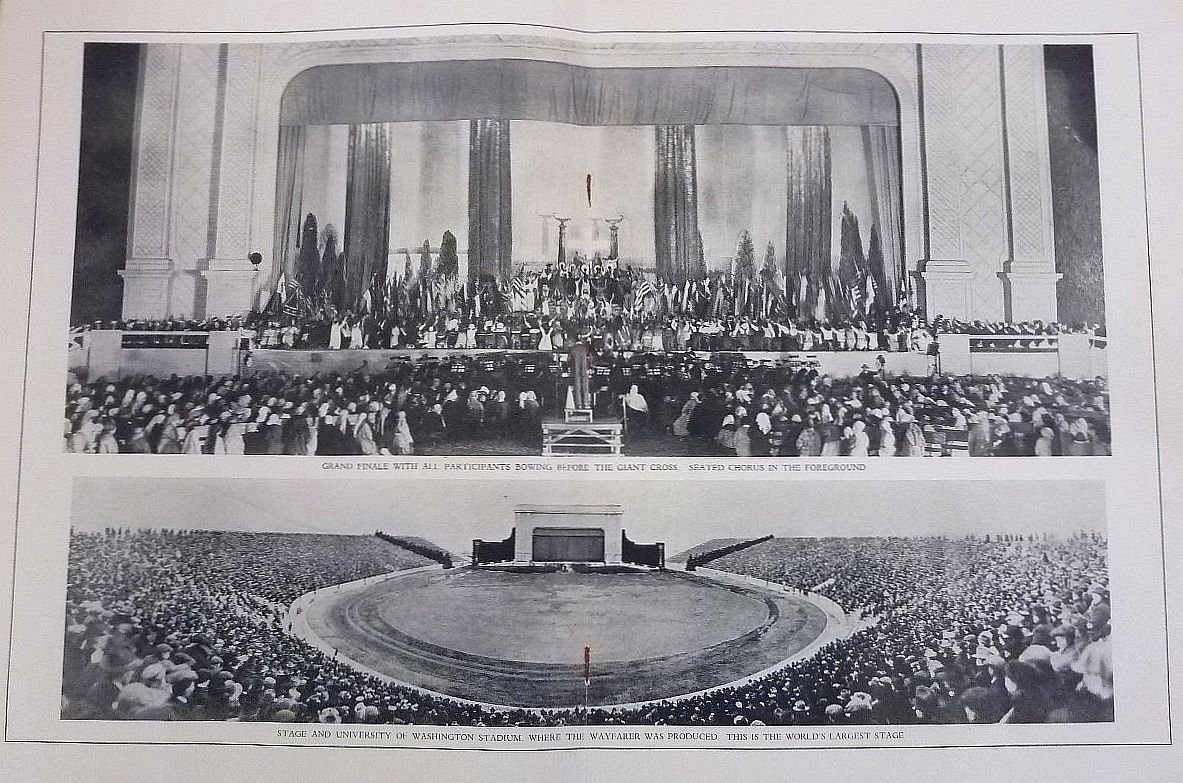
The musical pageant The Wayfarer, written by First Church senior pastor Rev. Dr. Crowther, became a nationwide hit. In Seattle, a cast of 5,000 drew crowds of 30,000 to the University of Washington stadium.
1926
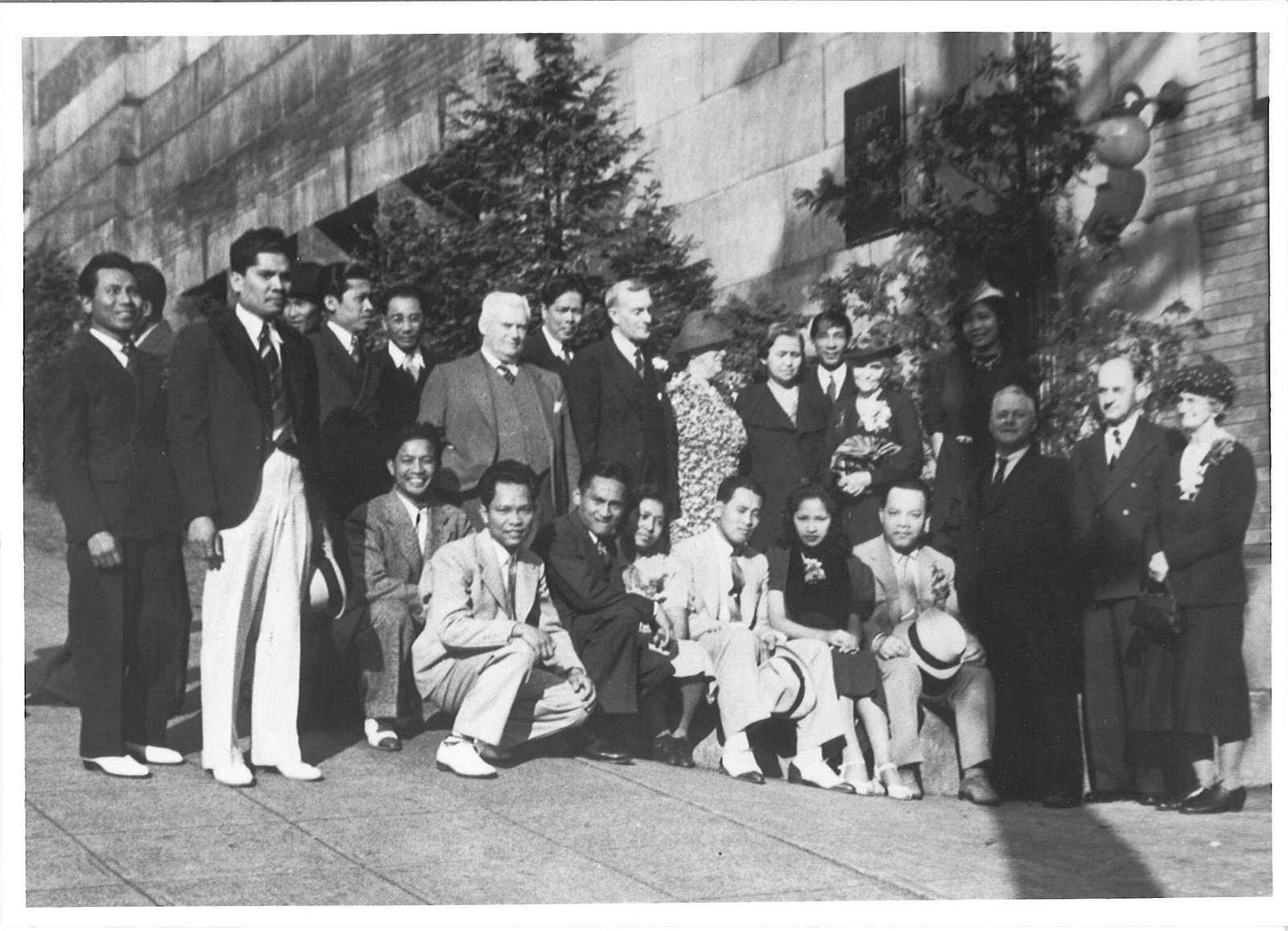
The Filipino Christian Fellowship held its first meeting, brought together by former Filipino missionary Rev. T. W. Bundy. The Fellowship would eventually become Beacon United Methodist Church.
1927
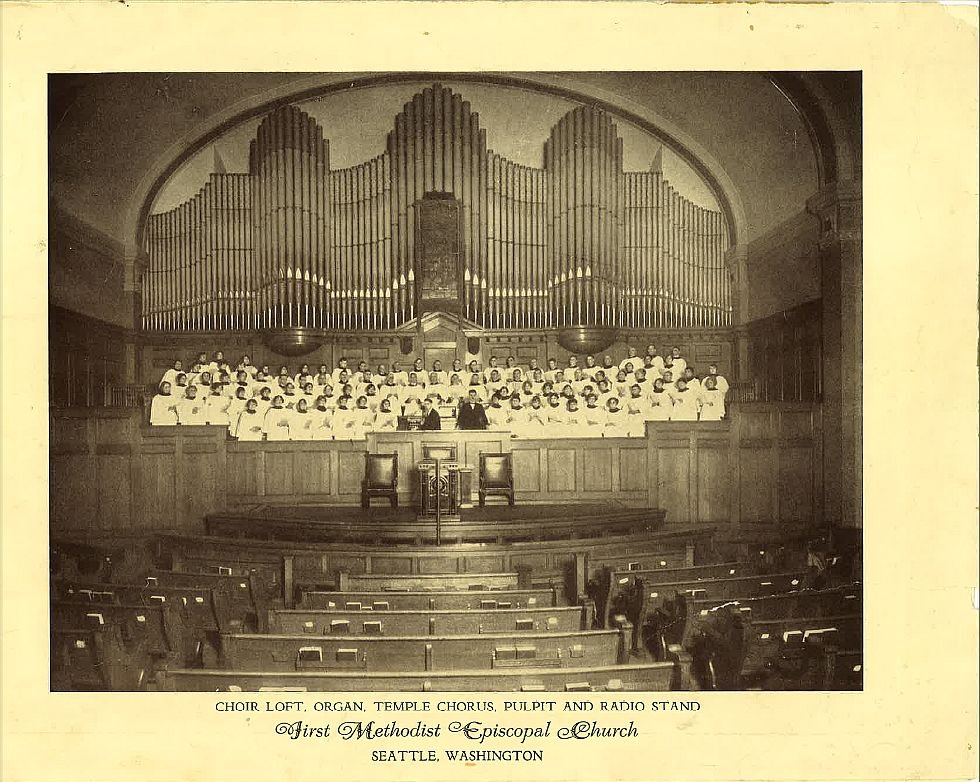
Sunday morning radio broadcasts began on KJR at the urging of Rev. Dr. J. Ralph Magee, who had arrived in 1921 having been told “First Church was doomed.” Under his leadership the church instead gained some 2,000 members, and a Hearst financial columnist named him one of the sixteen most influential people in Seattle.
1929
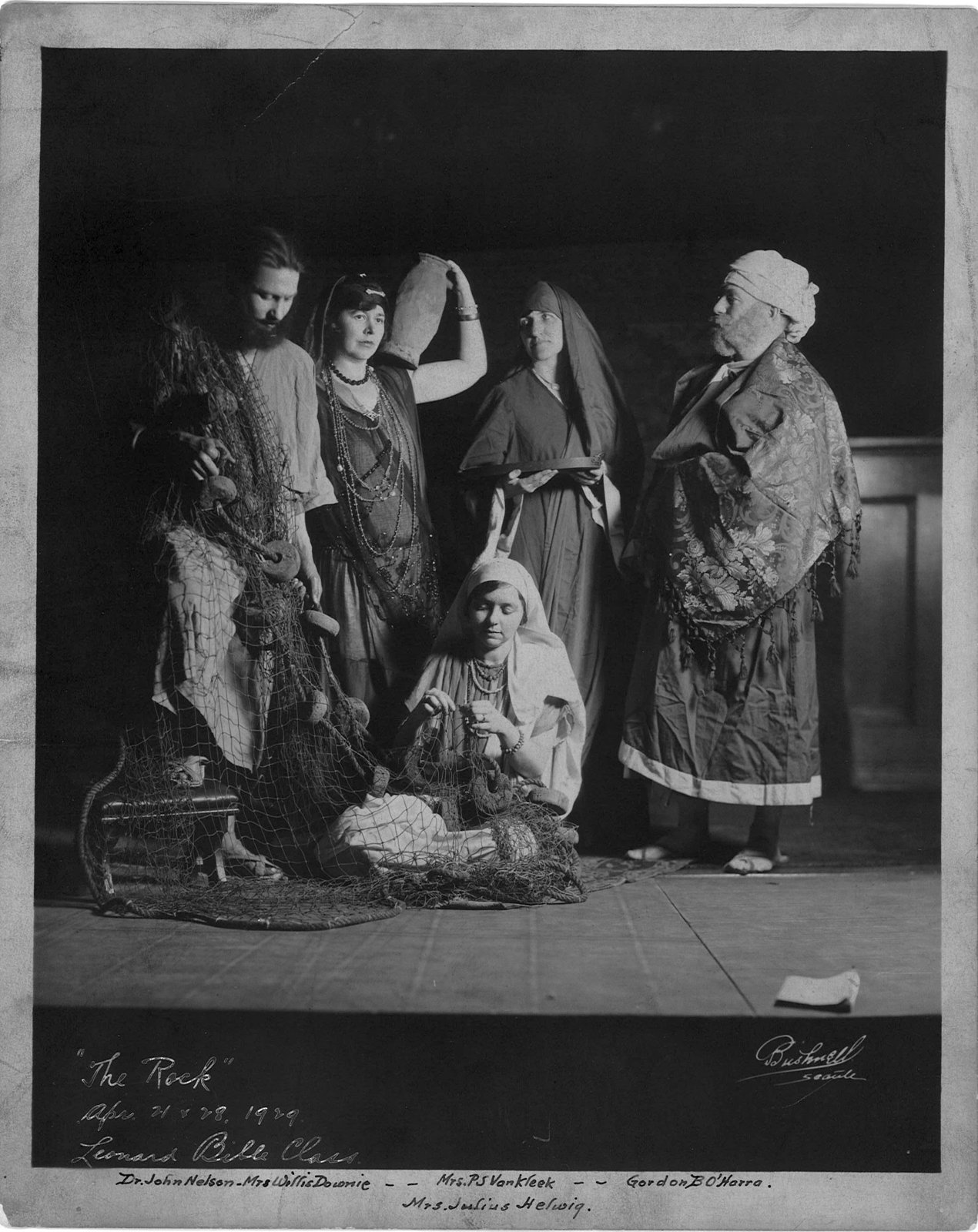
“In those days, we did big plays that took the whole evening service. We’d come down every night and practice and learn our lines. We’d have to have it letter-perfect before we’d put it on.” — church member Mary Farris (1919–2013)
1930
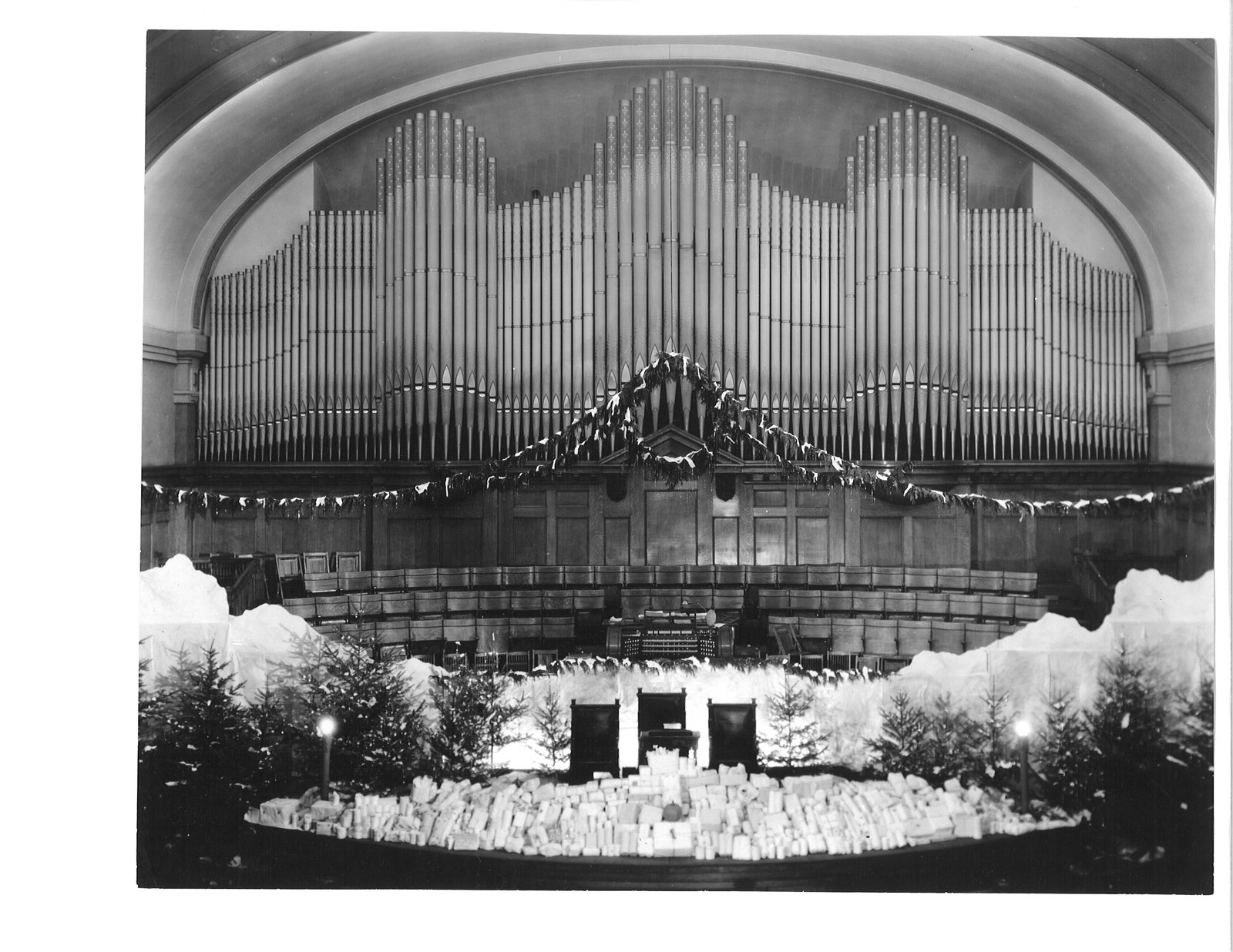
After the 1929 crash, church membership continued to increase — but giving fell off, and the radio broadcasts had to cease for a time.
1934
Harry Wilson’s Friday night movies carried on through the Depression, complete with audience singing during the pauses to change film reels. Hank Ketcham — the future Dennis the Menace cartoonist, then a young First Church member — drew for Wilson’s stereopticon slides.
1938
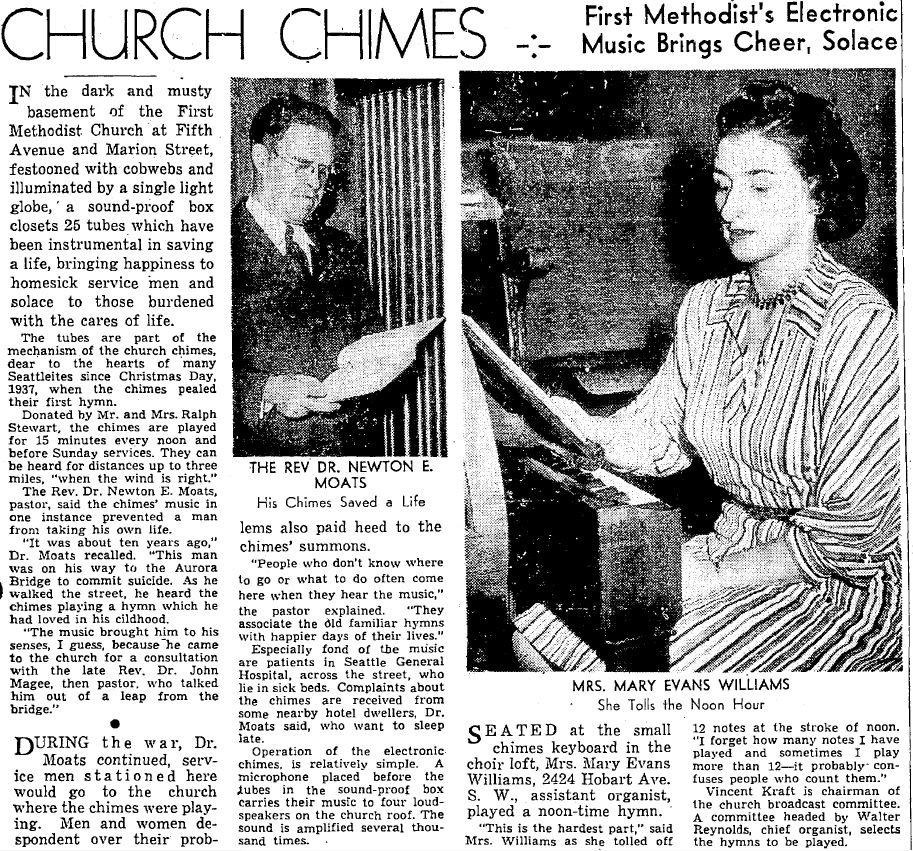
Synthetic chimes were installed and broadcast from the sanctuary roof via loudspeakers until the early 1950s. The church newsletter, The Chimes, still carries their name.
1939
A “Uniting Conference” merged the Methodist Episcopal, Methodist Protestant, and Southern Methodist denominations into one Methodist Church. The same year, First Church raised $6,000 to keep Trinity Methodist Church in Ballard from losing its property.
1942
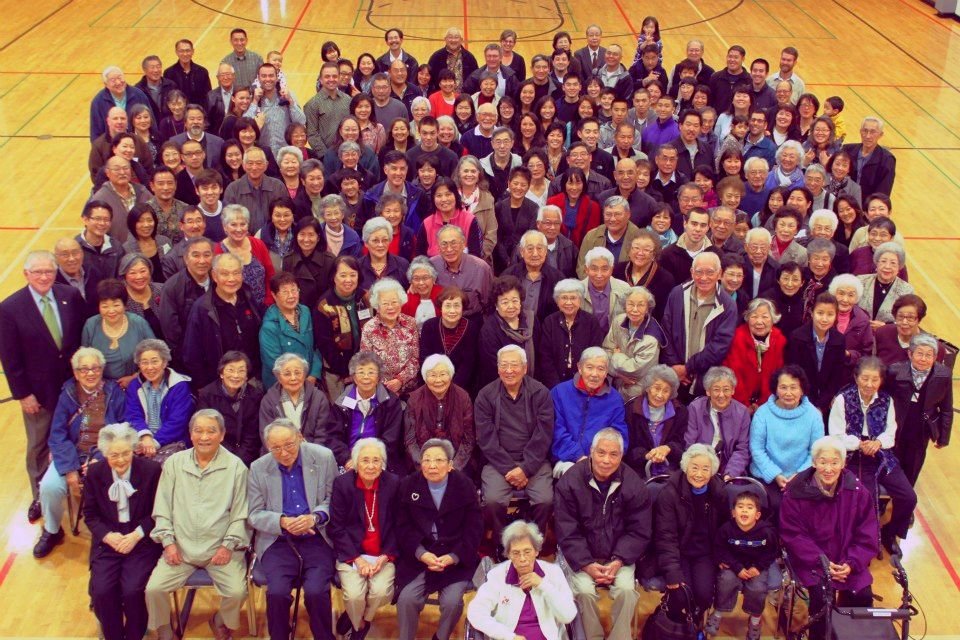
When Japanese Americans were forcibly incarcerated during WWII, First Church trustees — particularly E. L. Blaine — took over governing authority of the Japanese Methodist Episcopal Church’s properties to ensure the congregation would have a church to come home to. In 1956 that church was renamed Blaine Memorial Methodist Church in his honor. Church members also went to the Tacoma train station to protest the loading of the trains.
1945
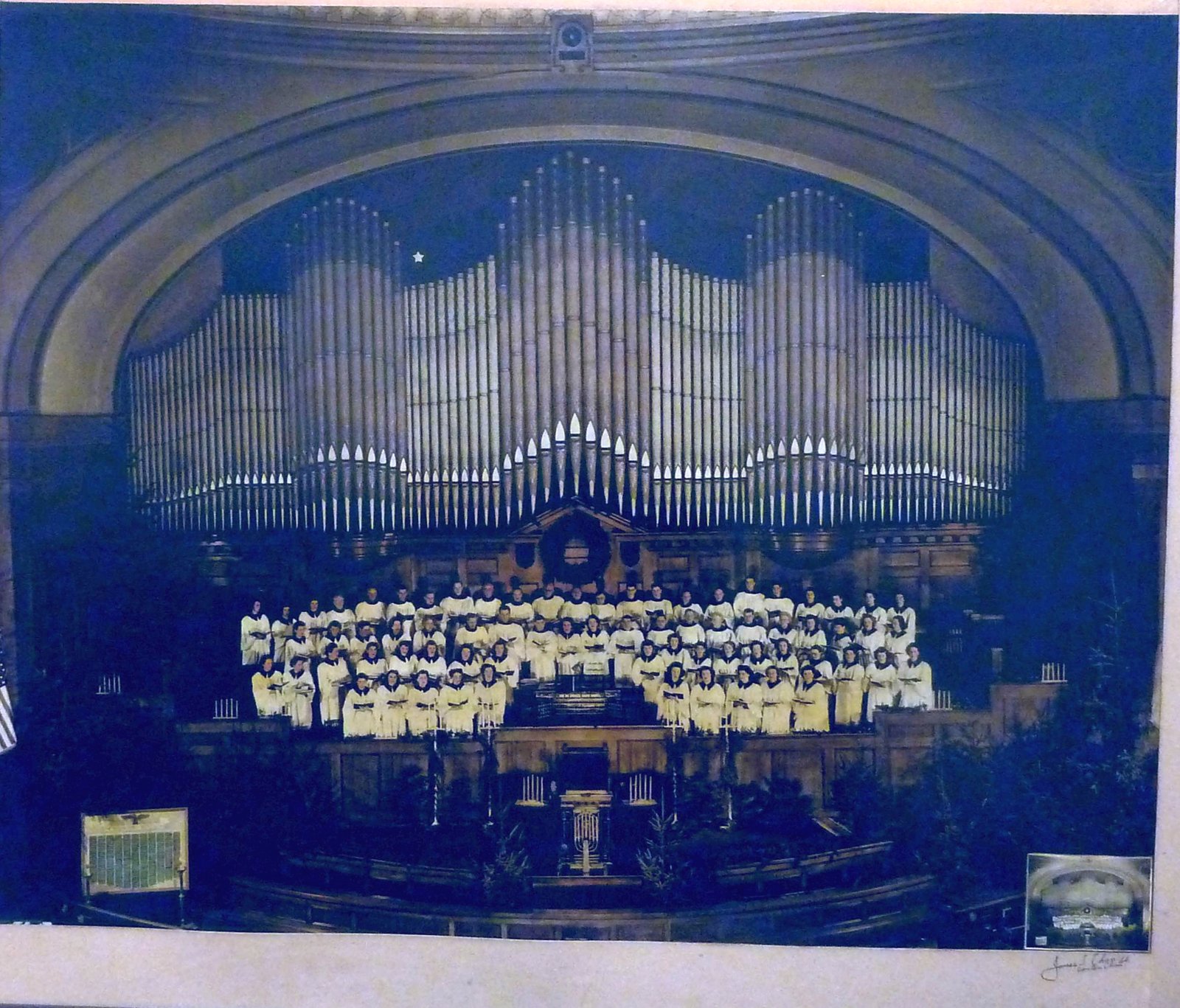
In the post-war years between 1945 and 1963, the church received 5,800 new members — at one point averaging a wedding a day. Social groups like the Merriweds and the Doubleringers thrived, Sunday services were broadcast on KEVR (predecessor to KING), and the budget quadrupled in under a decade.
1951
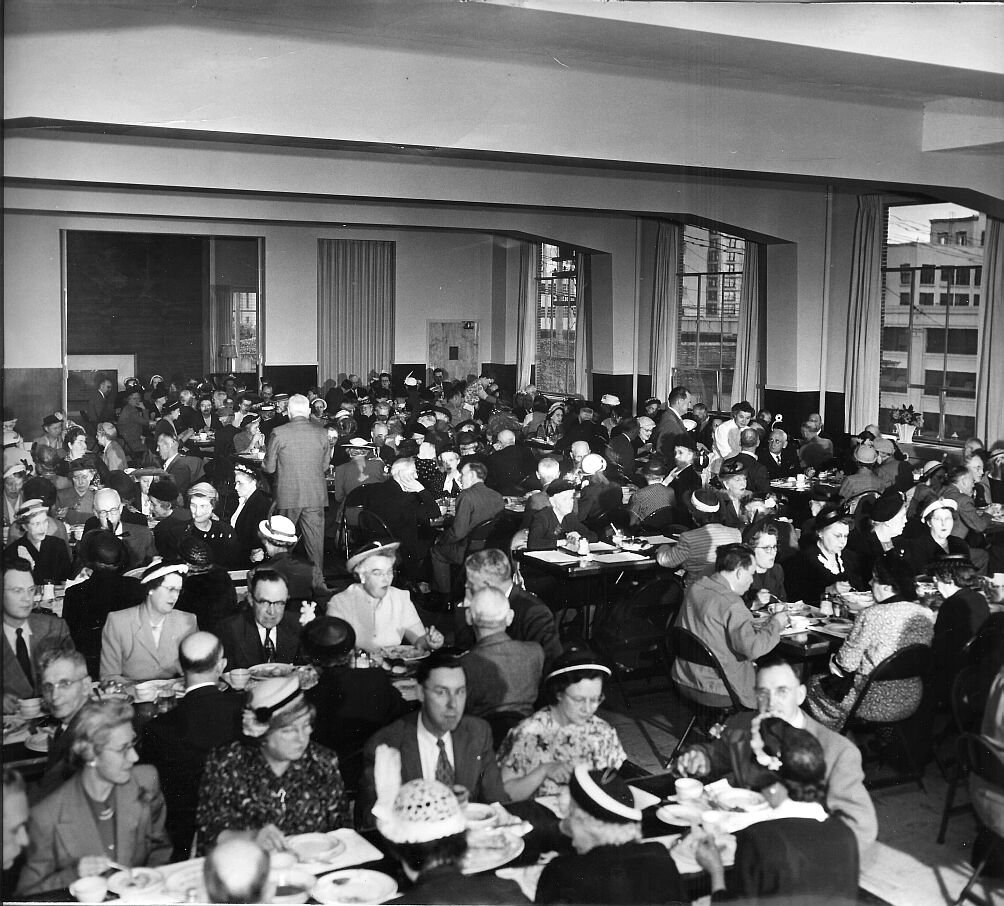
The Memorial Chapel and Education Wing opened in May 1951 — including Ralph Drury Hall — after two years of planning and construction. When the wing was demolished in 2016, its cornerstone time capsule came home to the congregation, holding among other things a hymnal from the 1870s and newspapers chronicling the start of the Korean conflict.
1957
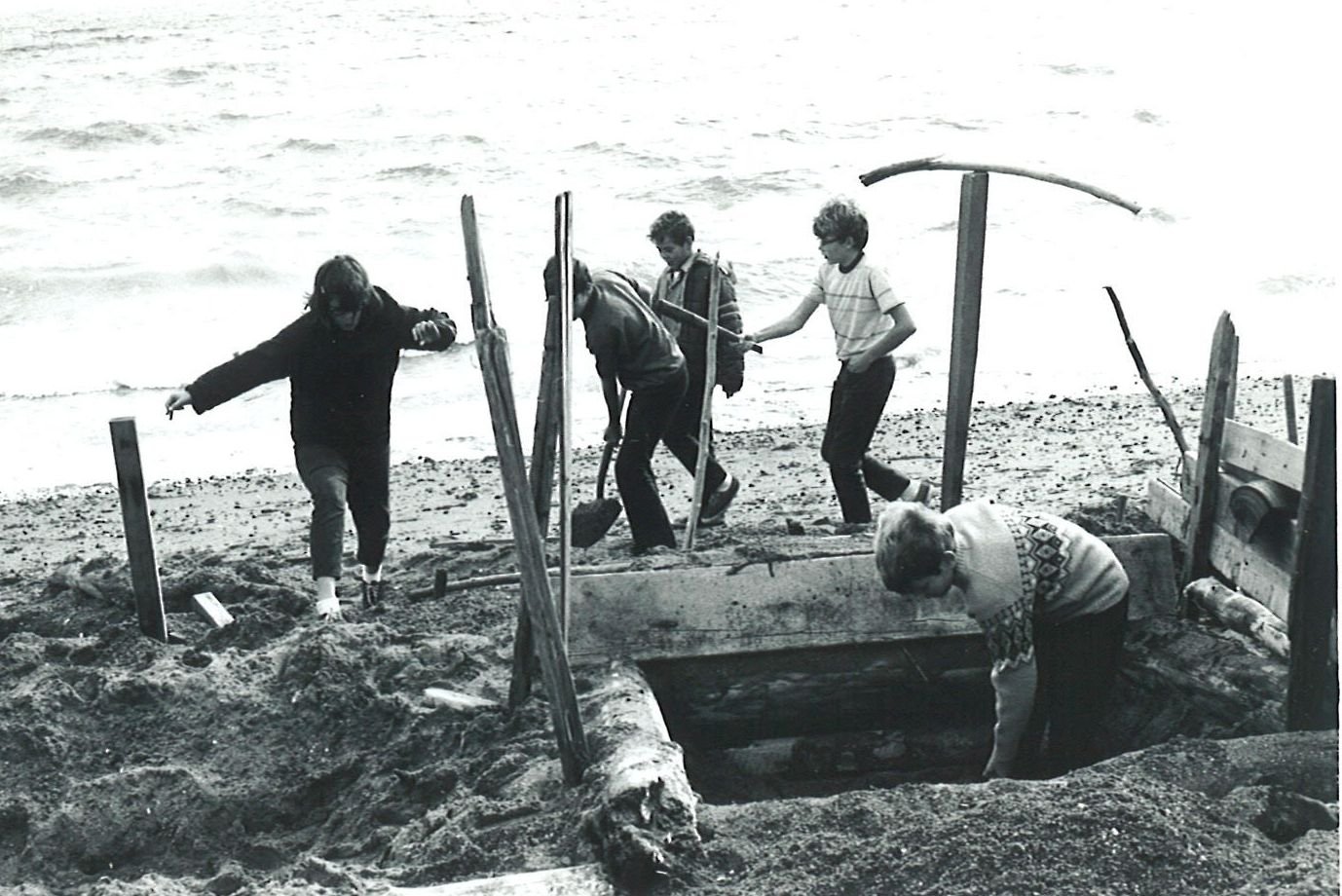
Under Dr. Cyrus Albertson’s leadership, the church purchased 35 beachfront acres on the Kitsap Peninsula — Camp Indianola, dedicated in 1958 and home to generations of First Church camping ministry.
1958
Associate pastor Rev. Chester Morgan founded the Friendly Club for persons over sixty, addressing the isolation of elderly residents downtown. Its outgrowth, the Columbia Club, offered nutrition, exercise, and health clinics for the next 40 years.
1960
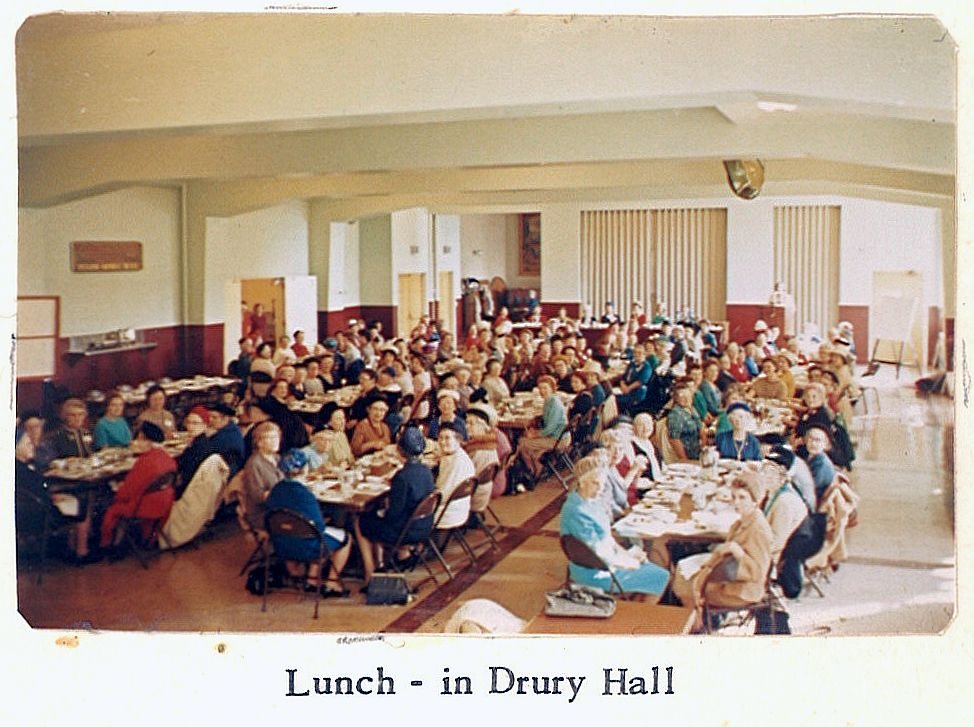
The widening of Fifth Avenue prompted replacement of the front steps with side stairs and ramp access. After 35 years of lay ministry, the congregation gave Harry Wilson a car for his 80th birthday. And the women’s circles met on, raising money through bazaars and rummage sales and serving church and community.
1961
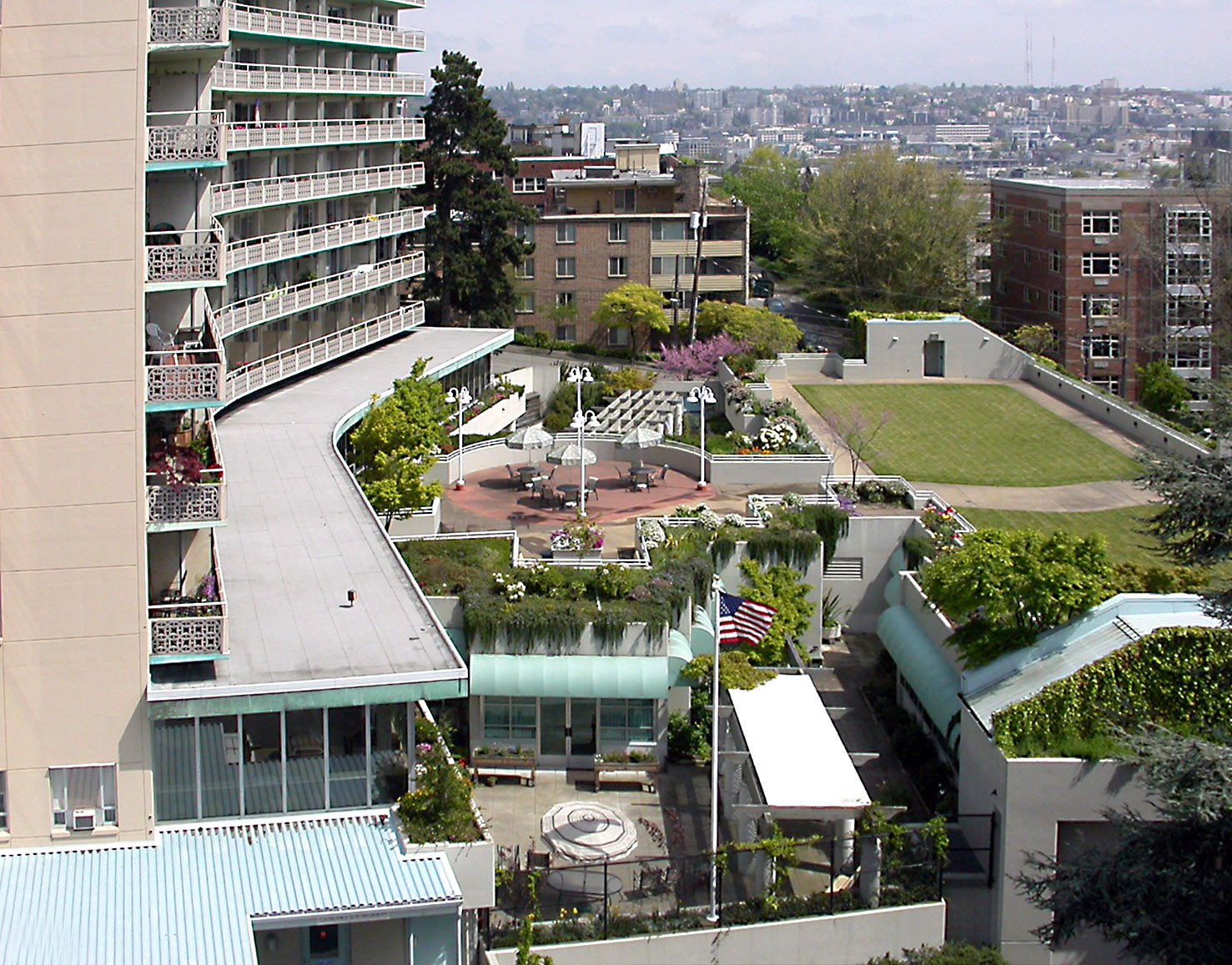
Bayview Manor opened at 11 W. Aloha on Queen Anne Hill — born when radio listener Charles Kinnear willed his property to the church for “a home for old people.” A 1995 addition brought a Wellness Center and child care center to the retirement community.
1962
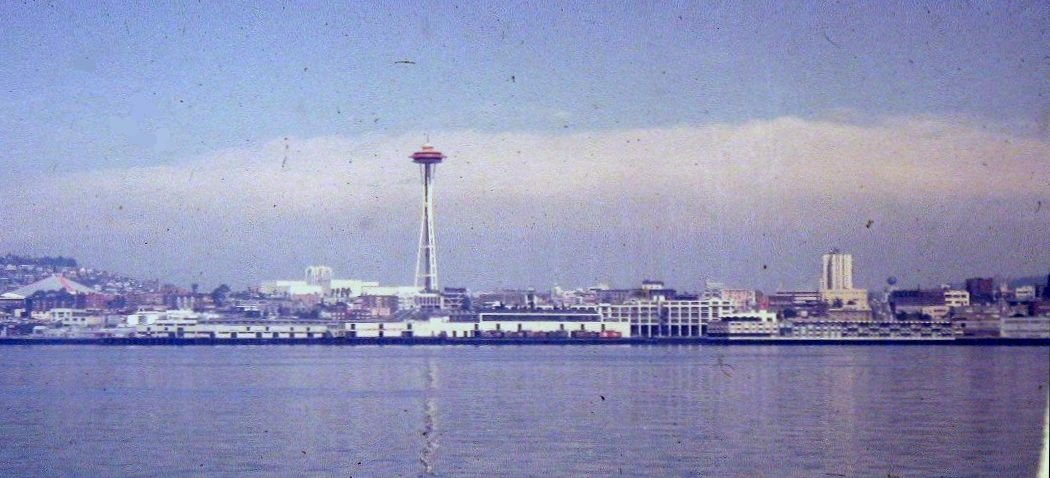
The world came to Seattle for the Century 21 Exposition, and Seattle mayor Gordon Clinton — an active First Church member — helped lead the Fair’s planning. The EUB congregation on lower Queen Anne hosted its national denomination’s annual meeting during the Fair.
1963
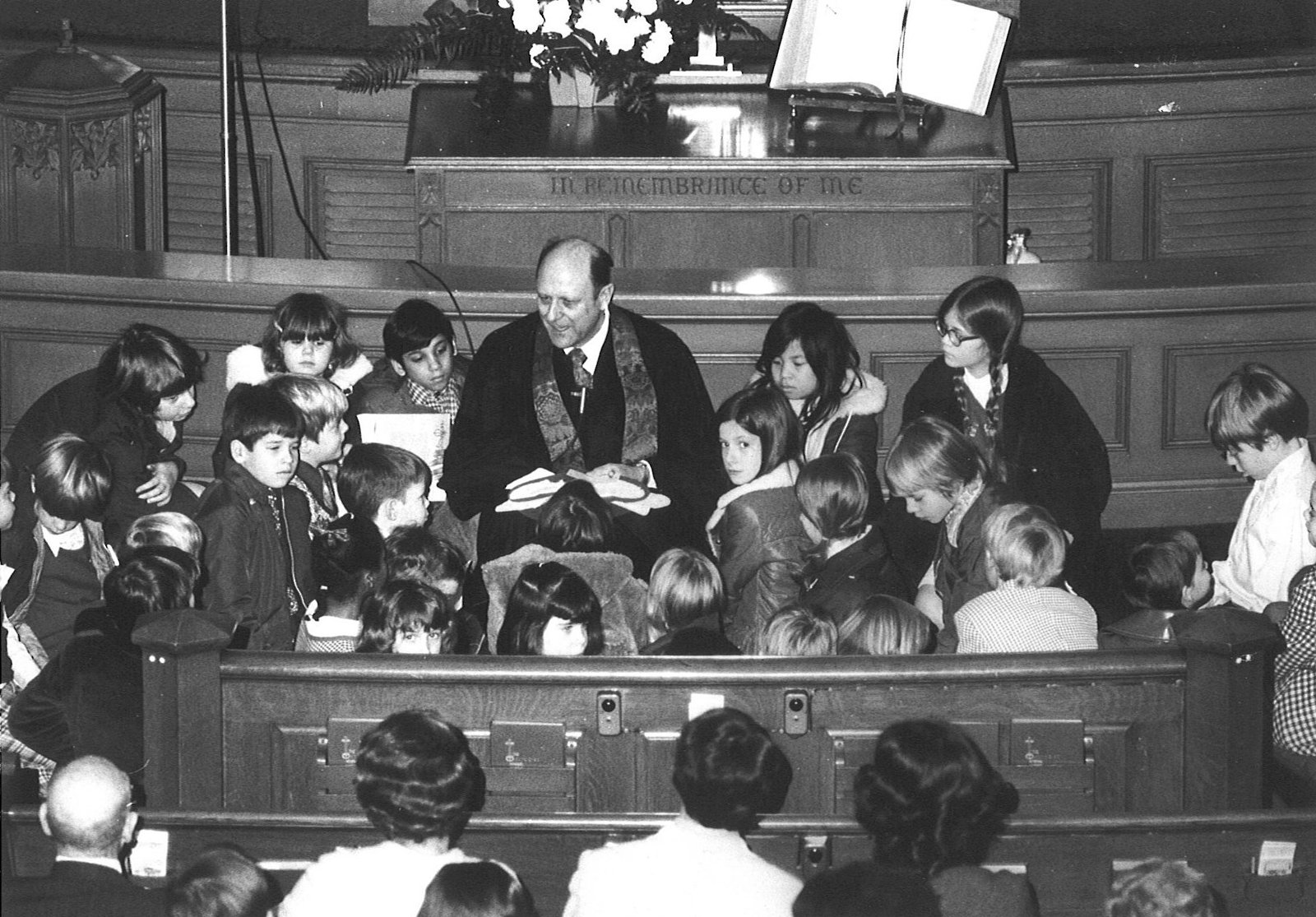
Former WWII chaplain Dr. Robert Uphoff led the church through the era of civil rights protests and Vietnam — writing to First Church servicemen and on behalf of conscientious objectors alike. He grew the Friendly Club into the Columbia Club, which fed several hundred senior citizens a day in Drury Hall.
1967
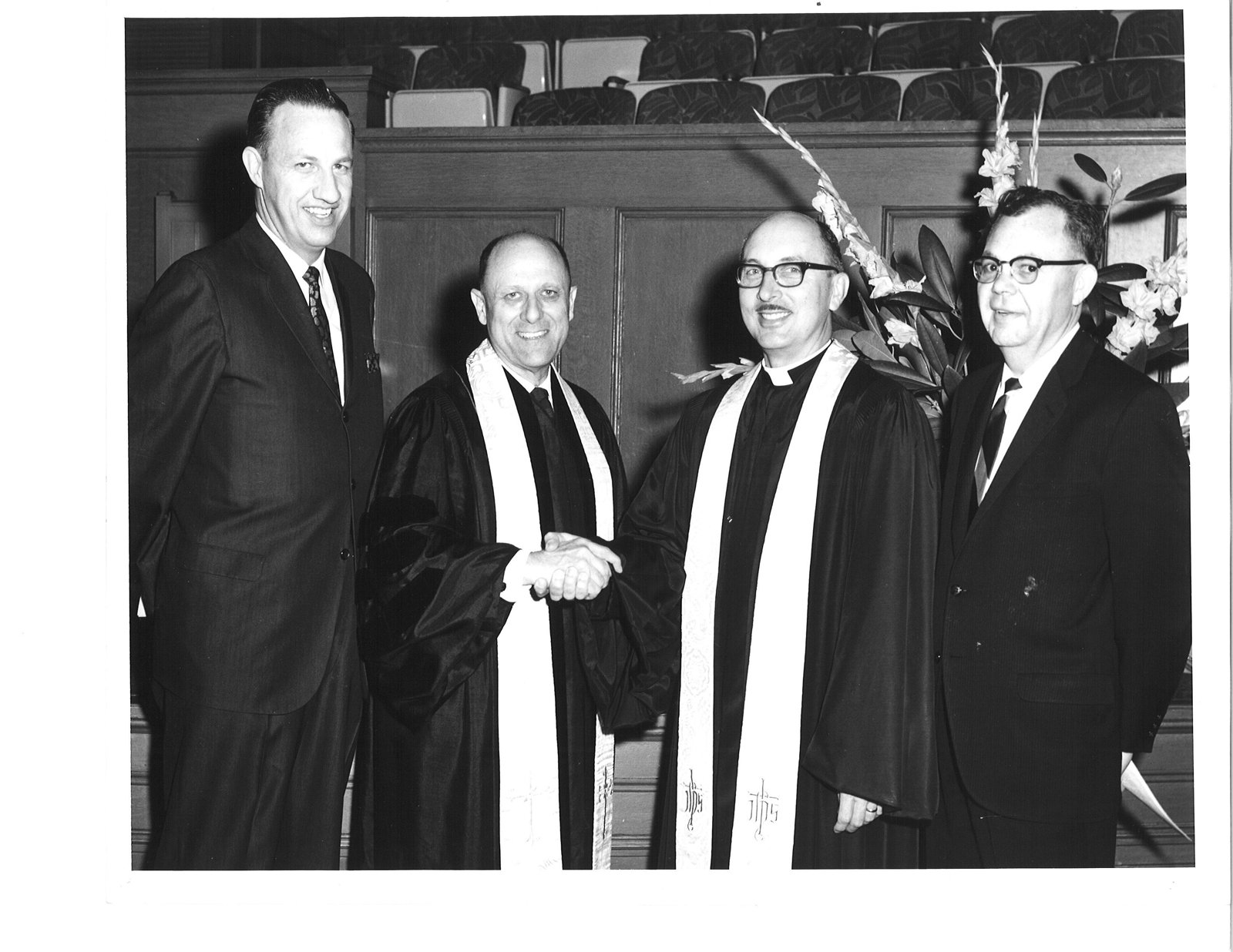
The Methodist Church and the Evangelical United Brethren merged nationally to become The United Methodist Church, and Seattle’s EUB members came to worship at Fifth & Marion. The same year, after eight years of construction, the I-5 corridor opened — separating the church from the residential neighborhoods of First Hill and Capitol Hill.
1968
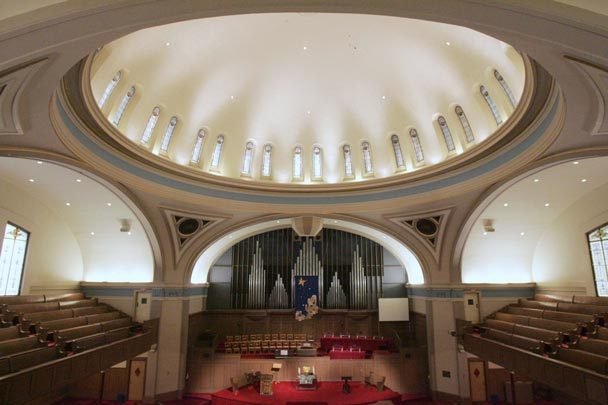
A new Austin organ replaced the 1911 Kimball, dedicated that September with a recital by renowned organist Frederick Swann. It still graces the historic building at Fifth & Marion.
1970
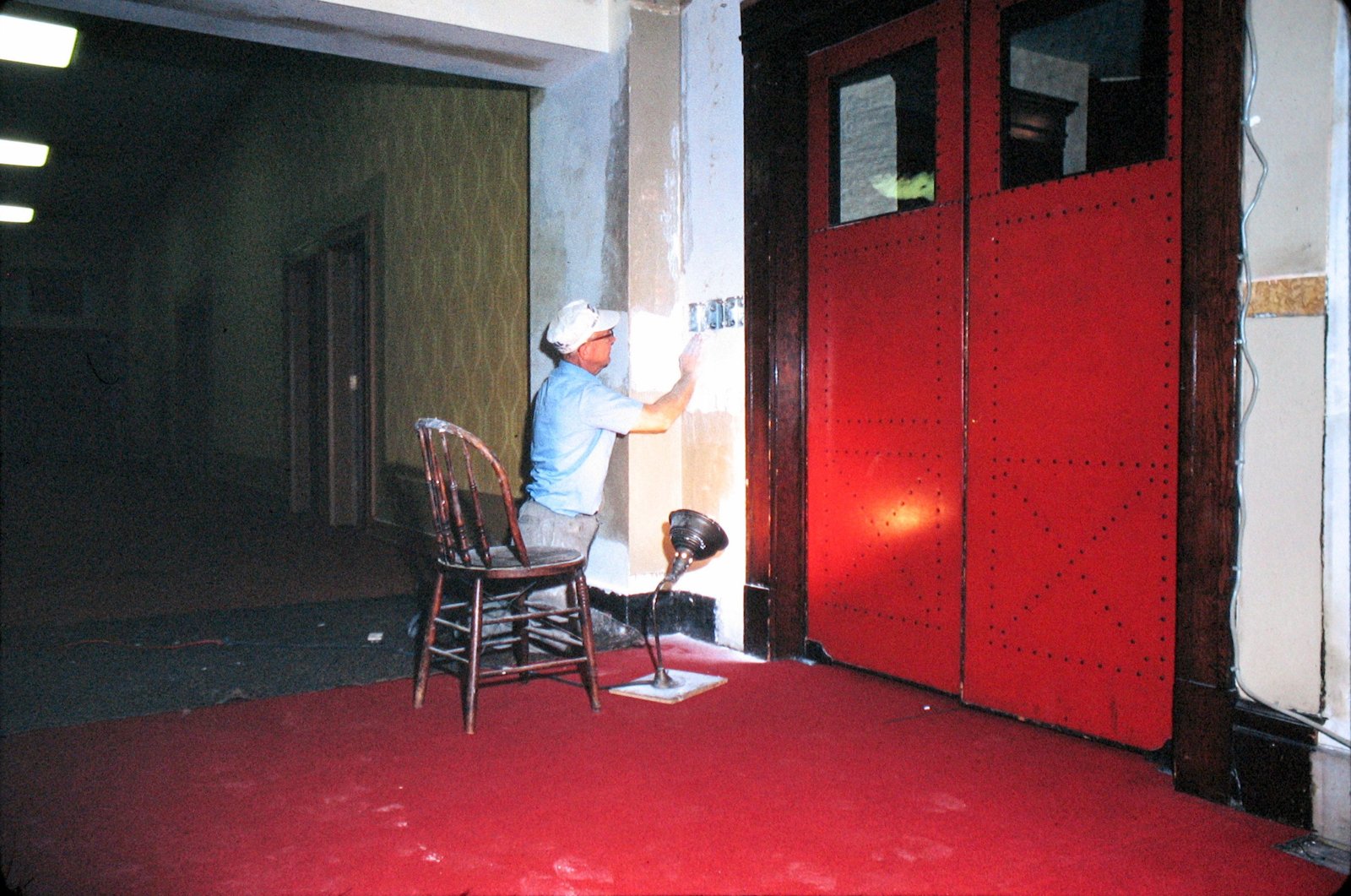
Boeing layoffs cut Seattle’s workforce in half between 1968 and 1974. Dr. Uphoff’s response: hire laid-off men of the church to extensively remodel the Blaine Room, complete with a performance stage and a lounge and archives area honoring Bishop W. Maynard Sparks’ leadership in the church union.
1972
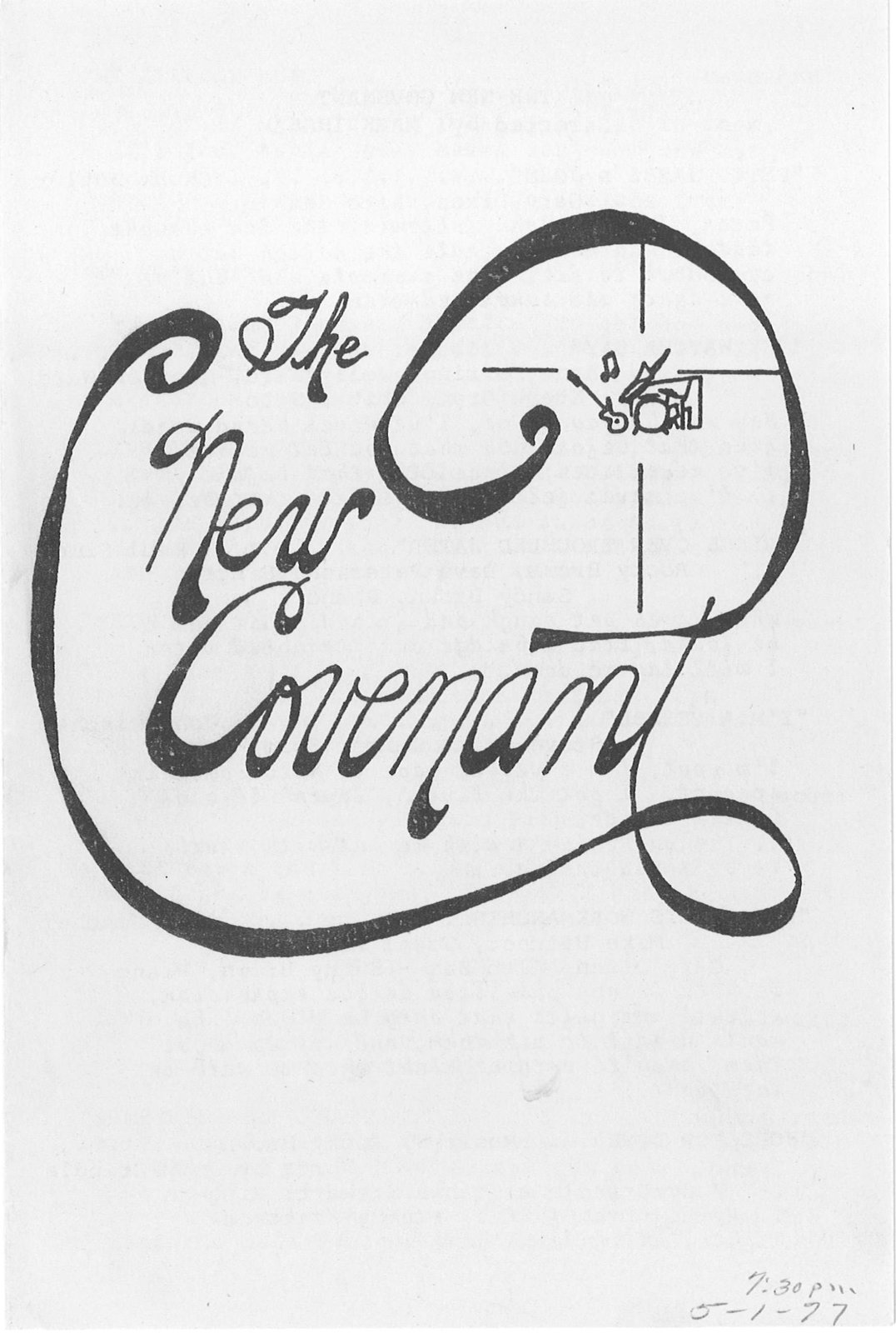
New worship styles arrived with the times: the Contemporary Singers, the Jesus Joy Singers, a rock group called The New Covenant, and the introduction of liturgical dance.
1973
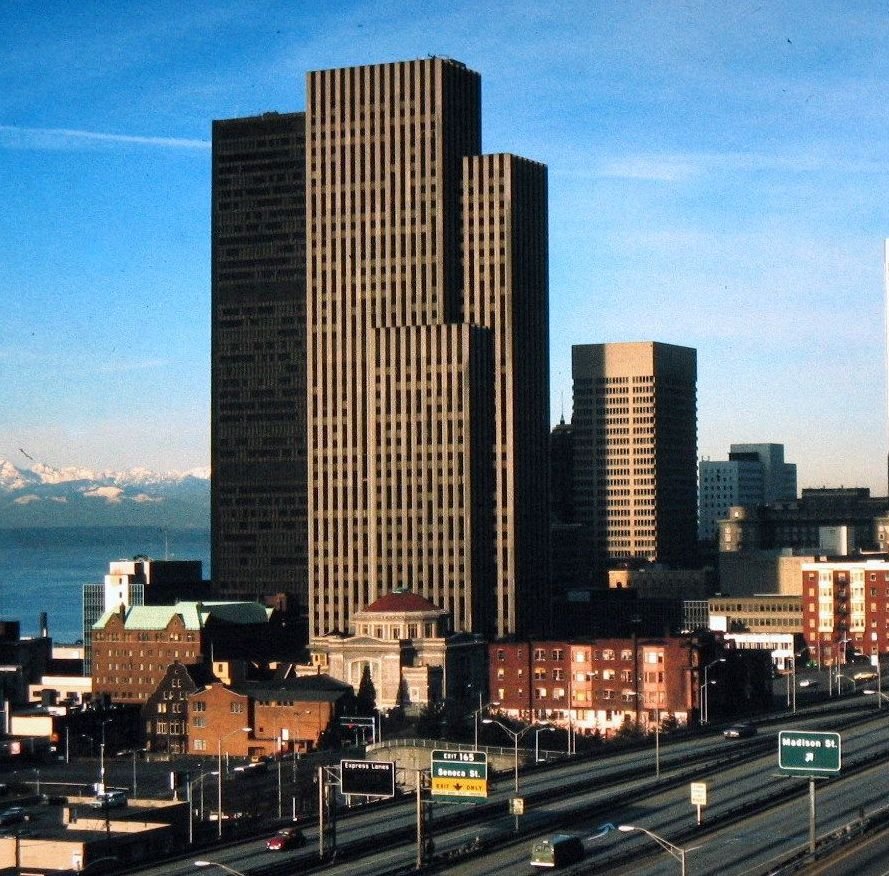
The 42-story Bank of California tower opened across Marion Street, the first of the skyscrapers that would replace most of the neighborhood’s apartment buildings within a decade. First Church increasingly shared its space with immigrant congregations — the Seattle Korean Evangelical Church, the Ethiopian Orthodox Church, the Russian Christ Church, the Juma Islamic Prayer group, and today the German-speaking Friedenskirche.
1977
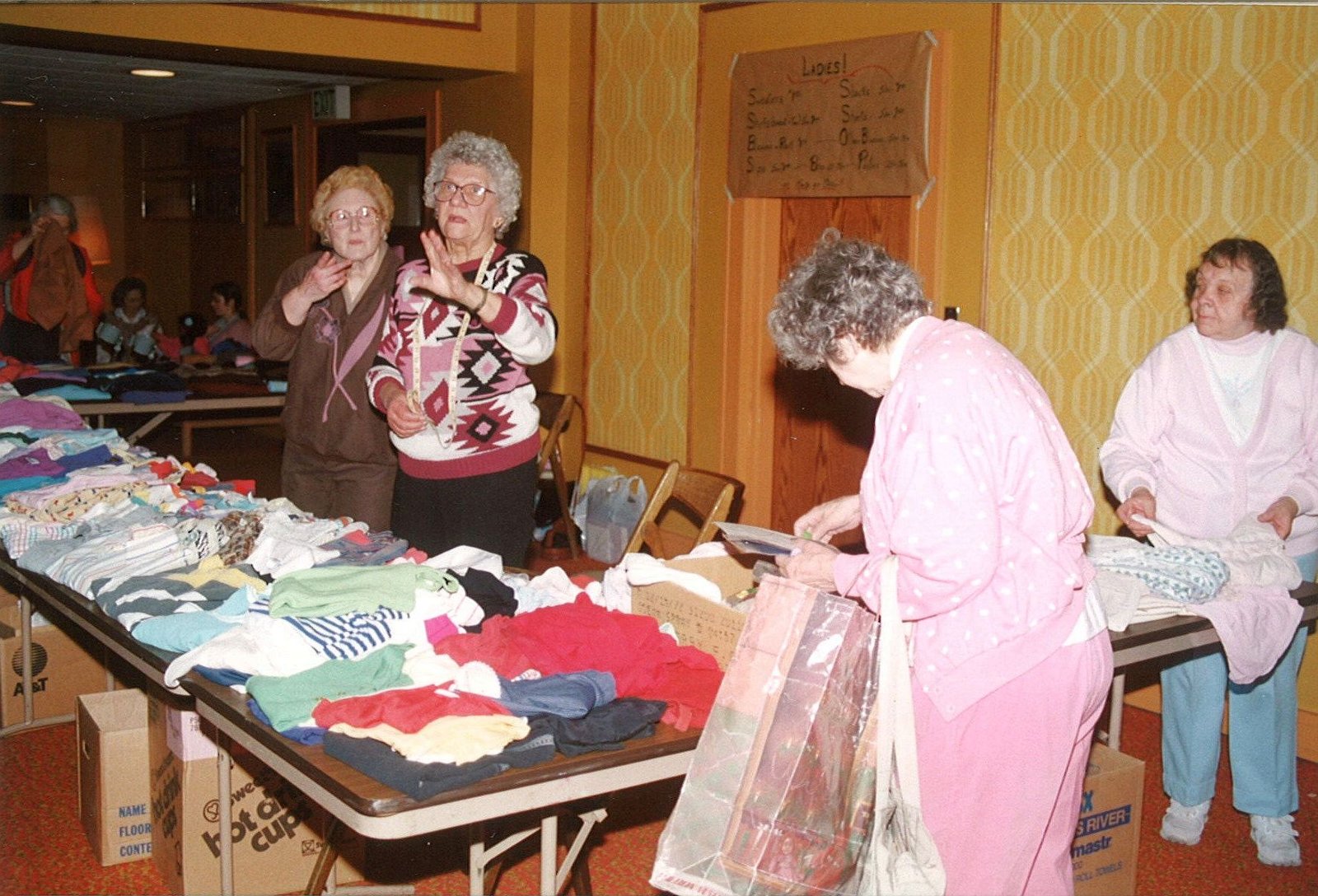
The United Methodist Women’s annual bazaars and rummage sales drew Seattle residents and office workers alike, raising significant funds for church projects and community service — a tradition spanning decades, chronicled in the two-volume “History of Women’s Work” in the church archives.
1978
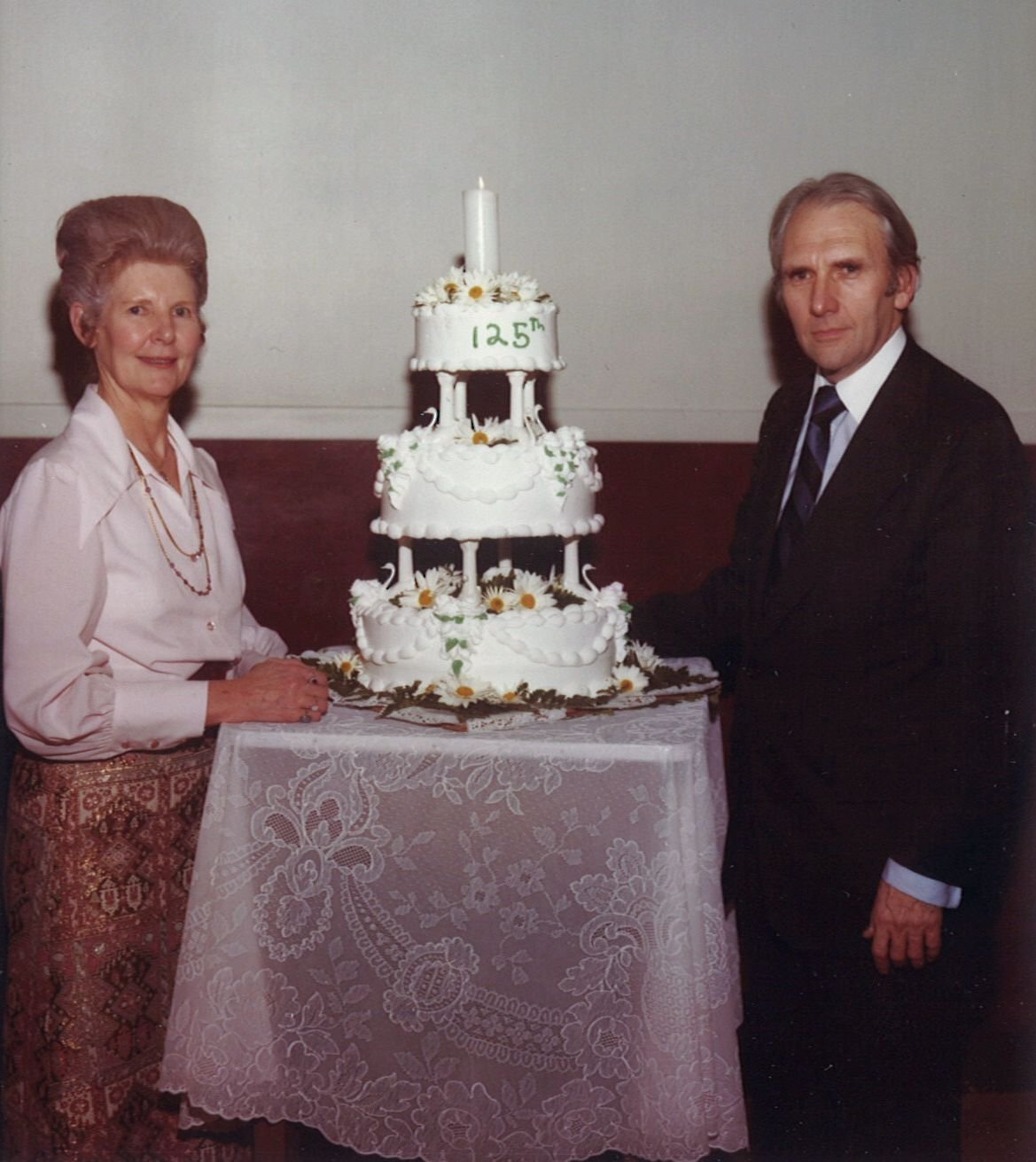
The 125th anniversary brought former pastors and church friends back for a glorious celebration, with Rev. Erle Howell — 33 years affiliated with First Church — publishing 53 articles on its history, “Church and City Grew Up Together.” The next year, Rev. Jan Anderson became the first female pastor to serve First Church.
1981
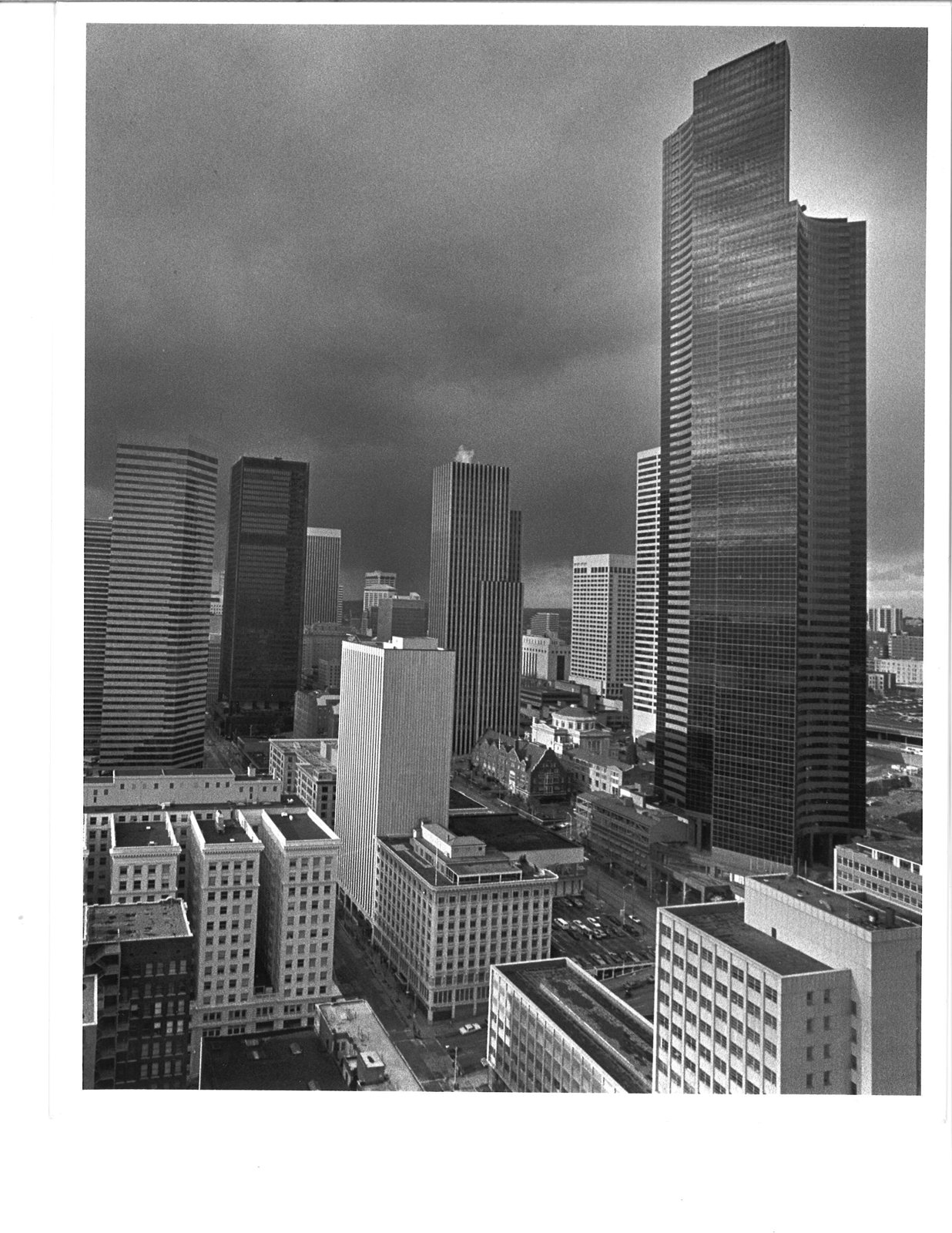
High-rises now rose on every side: the Fifth Avenue Plaza opened on the church’s former parking lot, and the 76-story Columbia Tower followed in 1985. As low-income housing downtown grew scarce, the congregation purchased the Emel Hotel at 14th and Main — renamed Pulliam-Wesley Haven — and ran its 26 units of low-income housing until 1999, when it was sold to Operation Nightwatch.
1982
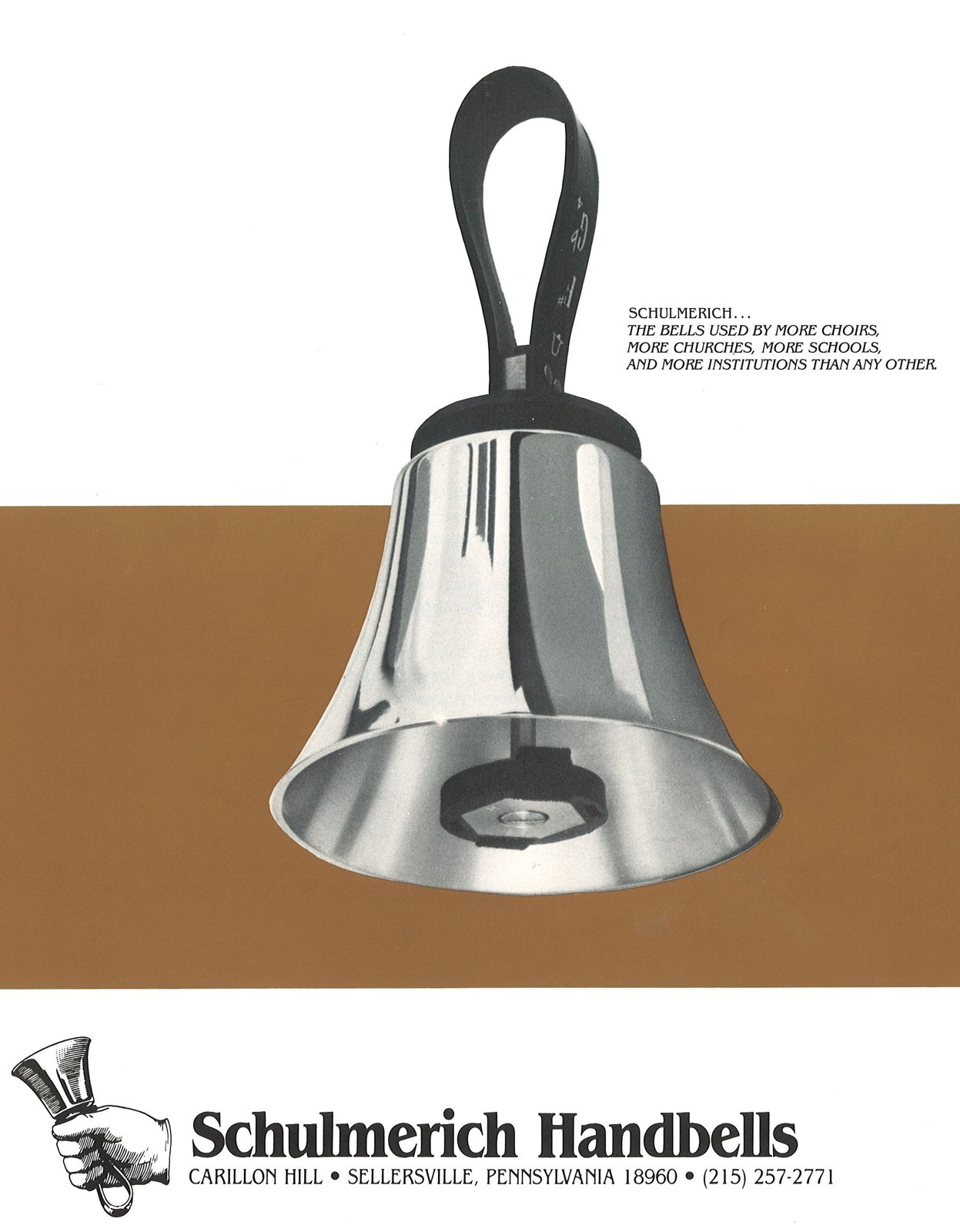
The first set of handbells arrived, and a group of younger adults and teenagers jumped right in to launch the Memorial Handbell Choir — with more octaves added over the years. Meanwhile, after two decades of wrestling with parking, high-rises, and an aging facility, the church began soliciting proposals to redevelop its property.
1983
The First Church Lecture Series began, bringing notable voices to Seattle including Rosemary Radford Ruether, Harvey Cox, William Sloane Coffin, Walter Brueggemann, and Bishop Leontyne Kelly.
1985
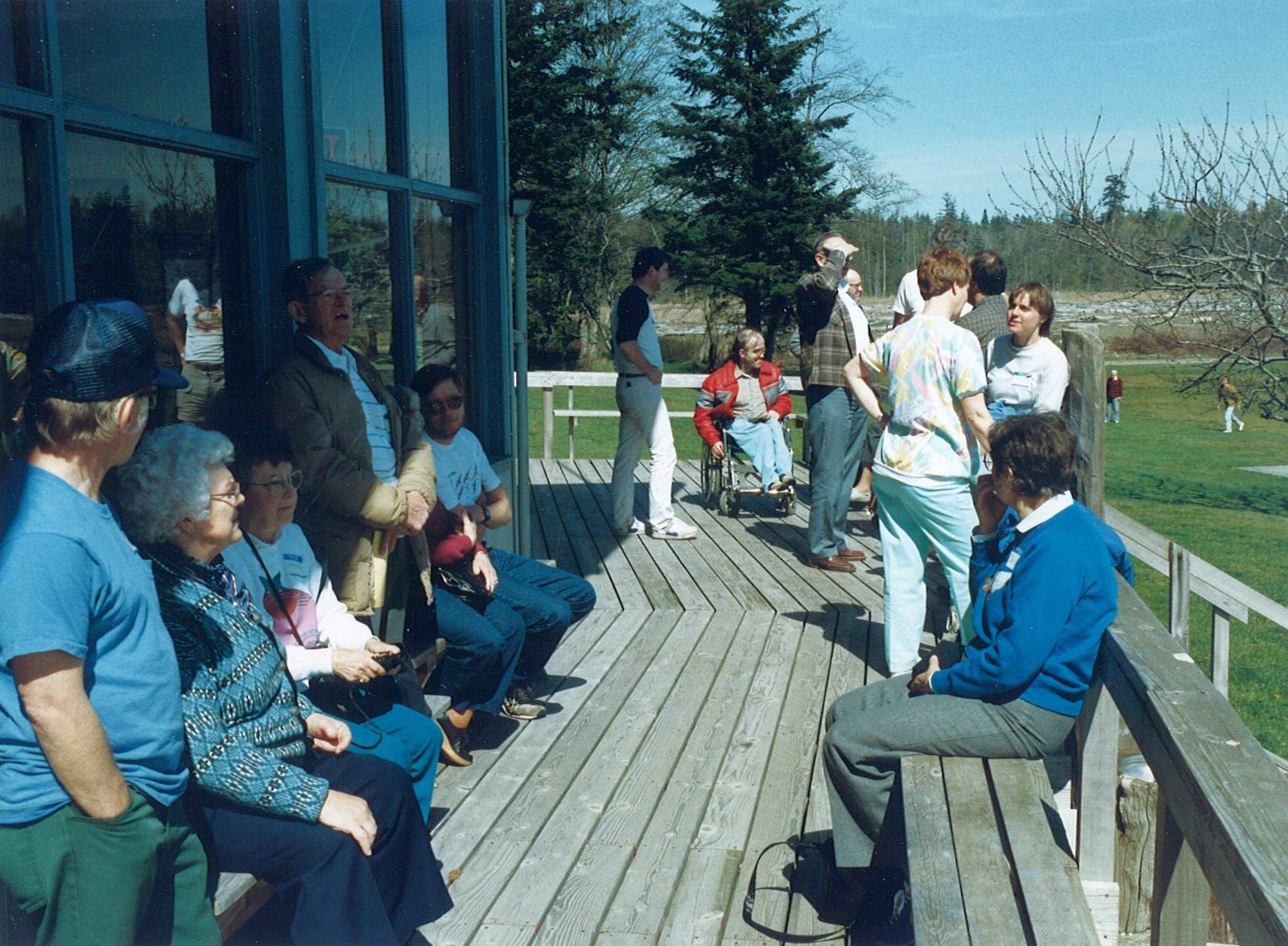
The City of Seattle moved to designate the 1908 sanctuary a historic landmark; First Church objected on religious-freedom grounds, beginning an eleven-year legal battle that would reach the Washington State Supreme Court. In happier news, the annual All Church Retreat at Camp Indianola began — a tradition of learning, reflection, and outdoor fun that continues today.
1989
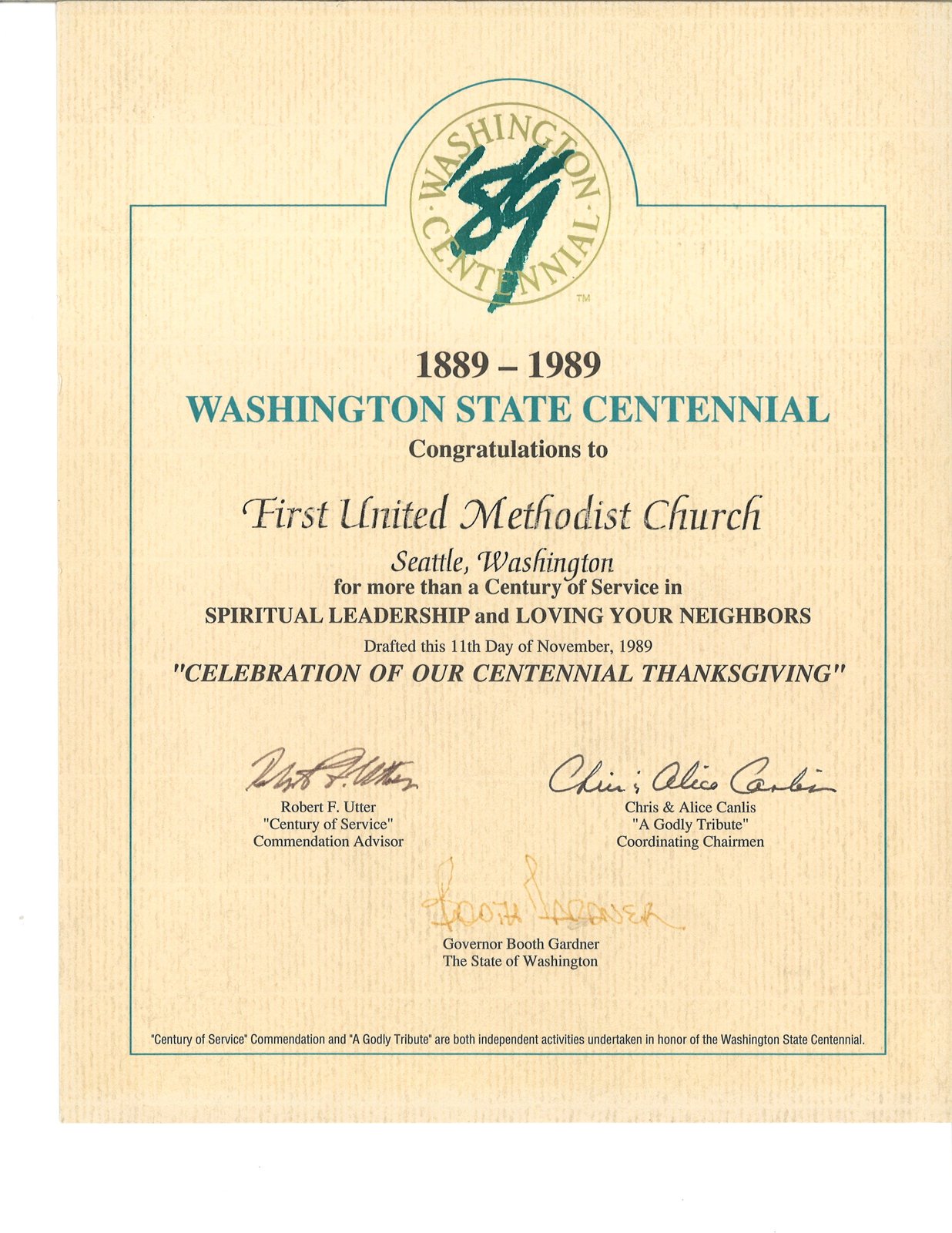
In Washington’s centennial year, Governor Booth Gardner honored First Church with a state Centennial award recognizing its 136 years of service to Seattle.
1991
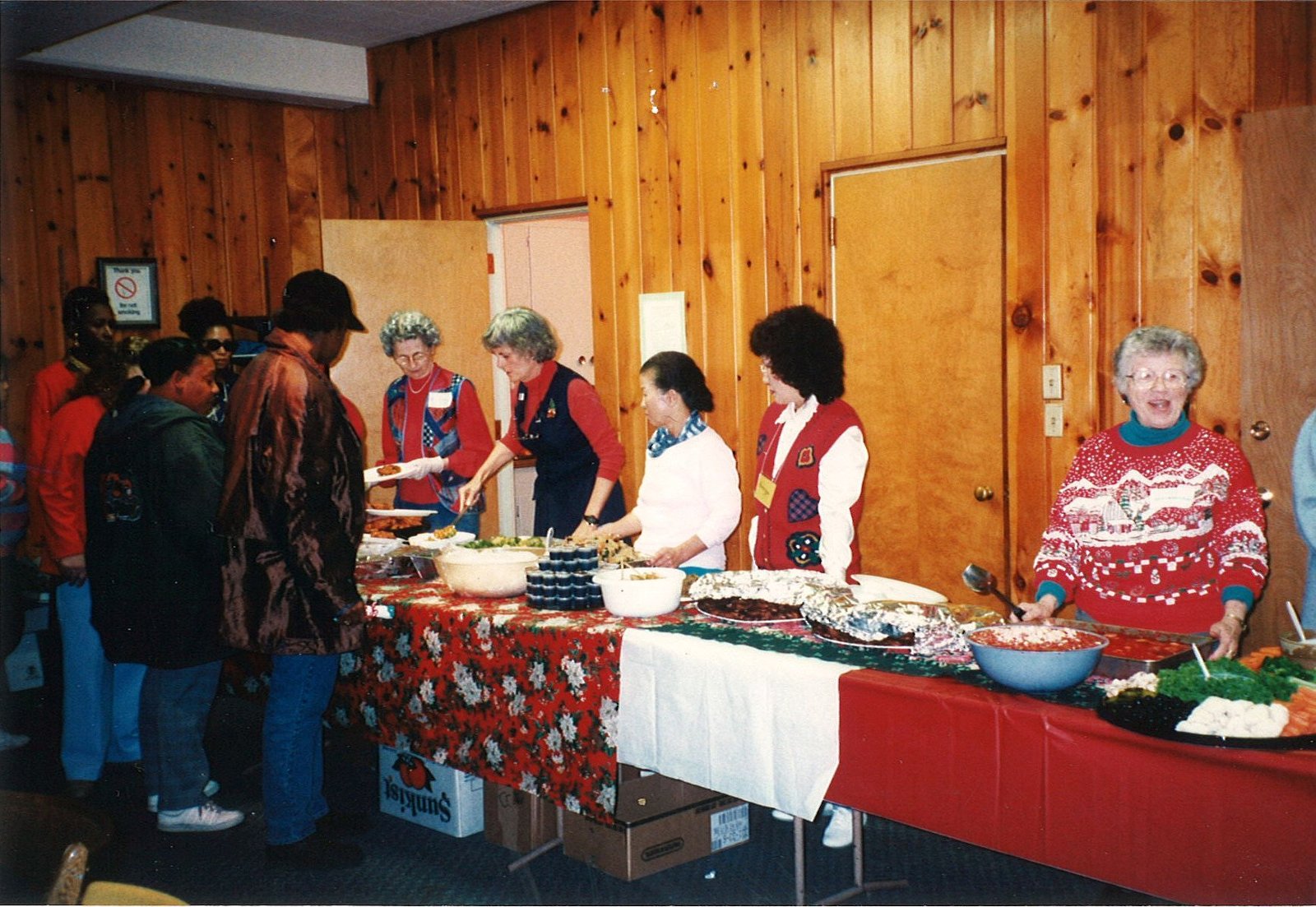
Rev. Jean Kim began holding Saturday worship for homeless women in the church’s lower level — the Church of Mary Magdalene — with First Church’s United Methodist Women and community volunteers serving noon meals. Its weekday outgrowth became Mary’s Place.
1993
For its 140th anniversary year, the congregation embarked on 18 long-range planning consultations to set a vision for the new millennium — with the rising number of homeless neighbors pointing toward expanded community outreach ministries.
1996
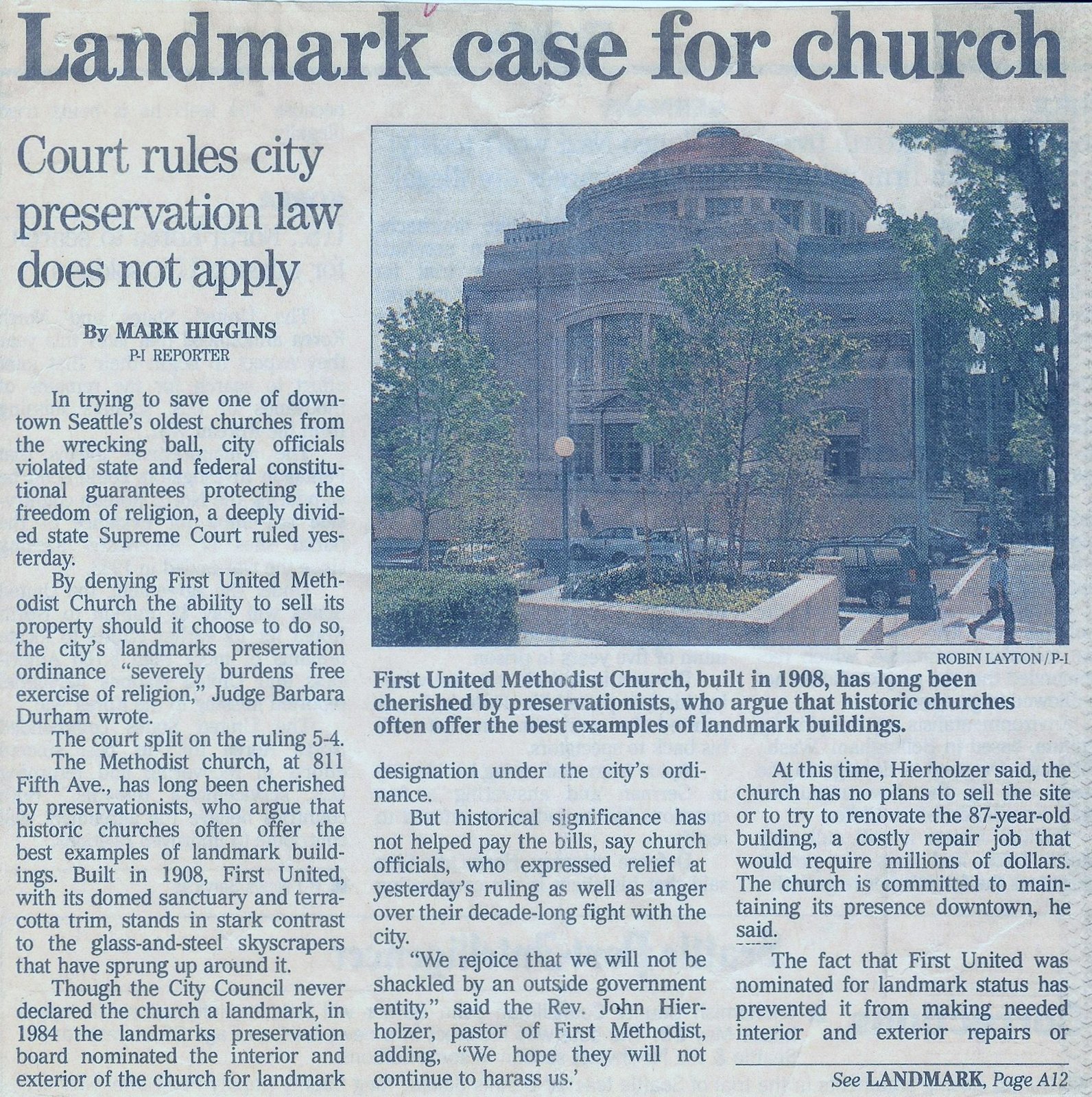
On May 9, 1996, the Washington State Supreme Court upheld First Church’s First Amendment right to the free exercise of religion, striking down the city’s landmark designation of the Fifth & Marion sanctuary. That October, the First Church Severe Weather Shelter began operation, opening its doors to 48 homeless men in cooperation with King County.
1997
The presence of neighbors in need prompted the start of Shared Breakfasts, an all-volunteer effort that began once a month on Sunday mornings — and would grow into a weekly ministry serving more than 15,000 meals a year.
1998
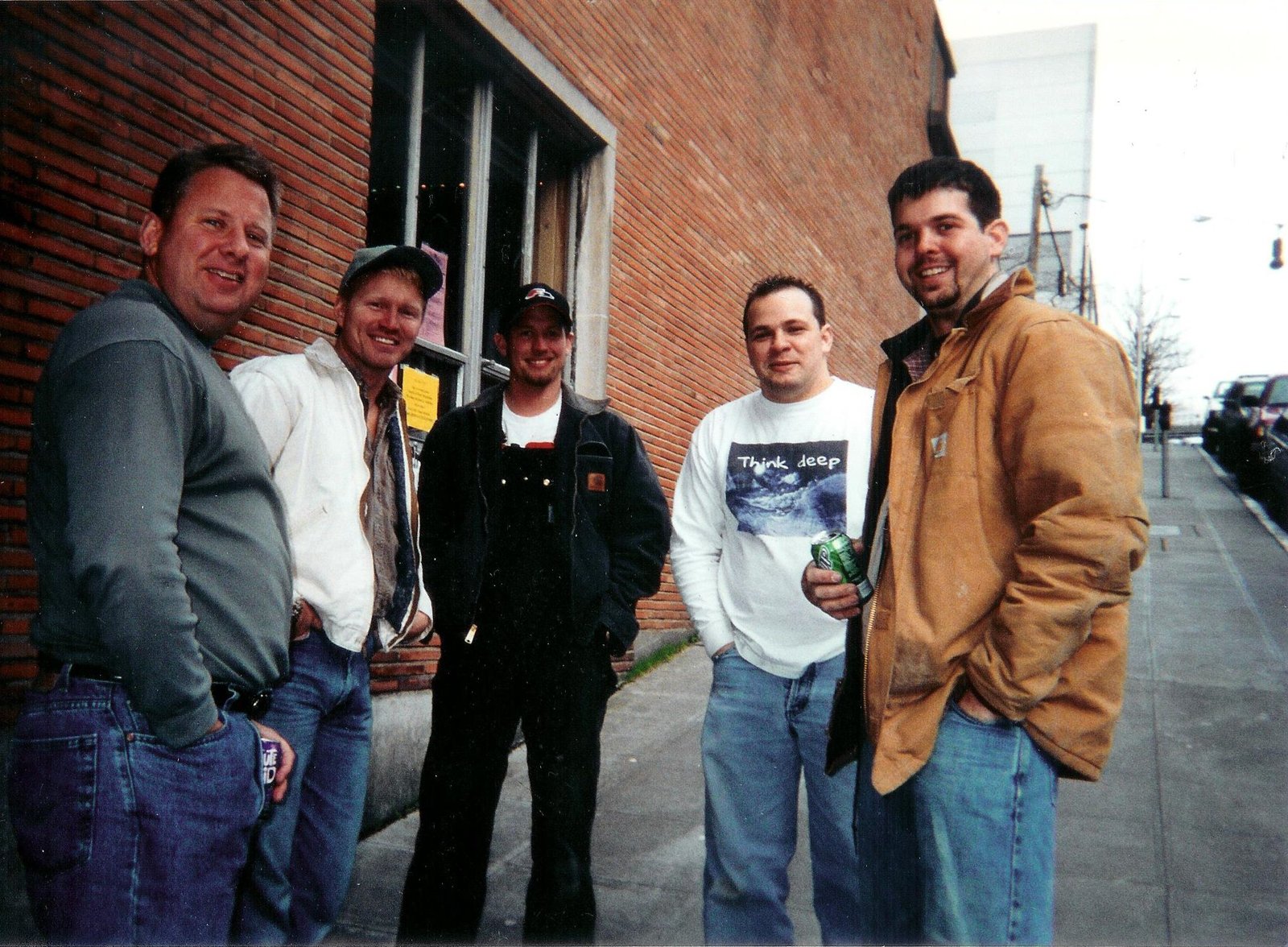
The “Future First” long-range planning process set redevelopment goals: keep First Church a sacred space, inviting and inspiring, with urban outreach at its heart. A new hygiene center — showers, sinks, washers and dryers — served the men of the shelter and the women of the Church of Mary Magdalene. In 1999, Rev. Dr. Kathlyn James became the church’s first female senior pastor.
2000
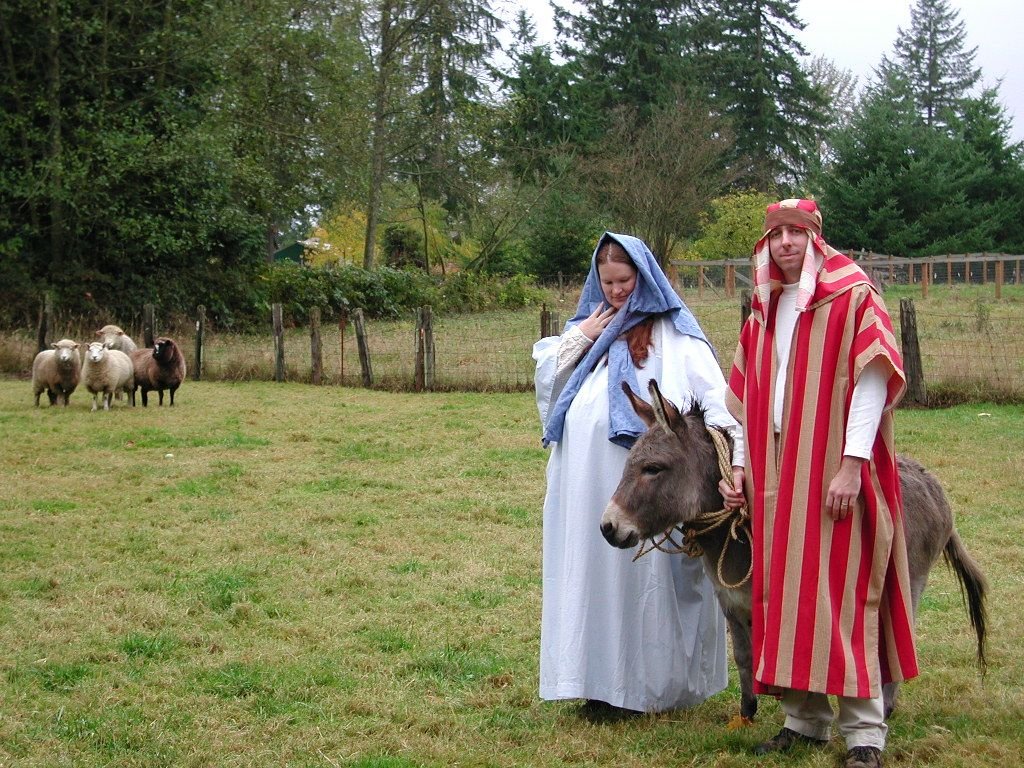
Morning worship began integrating multi-media — the first PowerPoint brought a Christmas Nativity pageant staged at a Snohomish farm into the sanctuary — and the Celebration Service’s interracial, intercultural, and intergenerational values were woven into morning worship. Church members staged three sell-out performances of Godspell in the Blaine Room.
2001
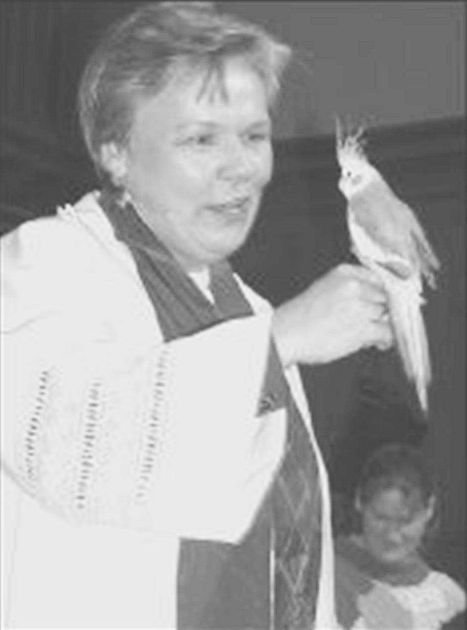
On Ash Wednesday, the magnitude-6.8 Nisqually earthquake damaged the sanctuary’s southeast corner, balconies, and organ loft, moving worship to Drury Hall until June. That fall, Rev. Dr. Kathlyn James began the Blessing of the Animals, an annual tradition that continues today.
2003
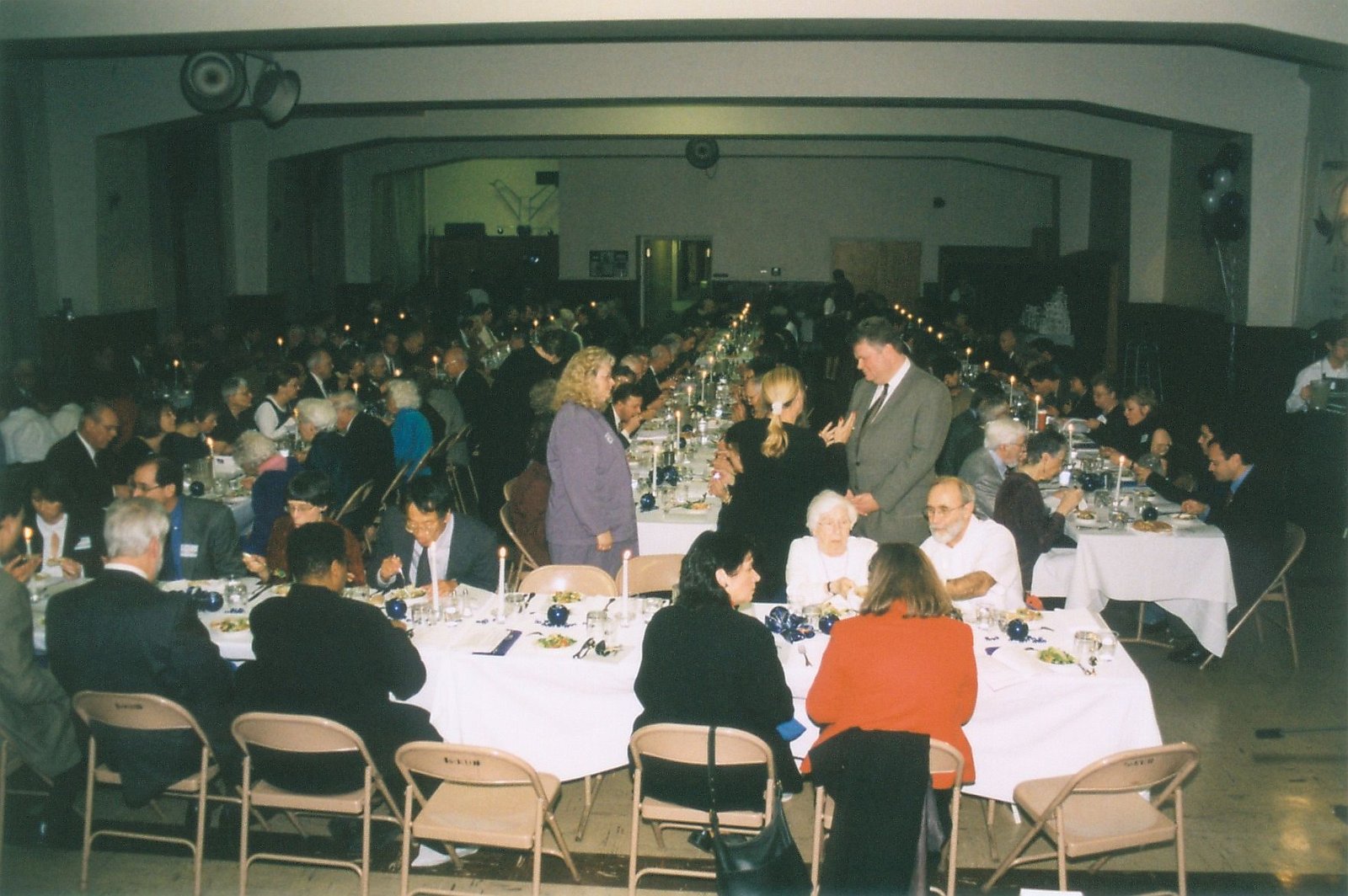
First Church celebrated its sesquicentennial, culminating in a “Walk Through Time” dinner where Mayor Greg Nickels proclaimed December 2003 Seattle First United Methodist Church month. A Thanks and Recognition Dinner honored the Duwamish people’s friendship since the church’s earliest days — including saving the life of Arthur and Mary Denny’s infant son in 1851 — with storytelling, gift-giving, singing, and dancing.
2008
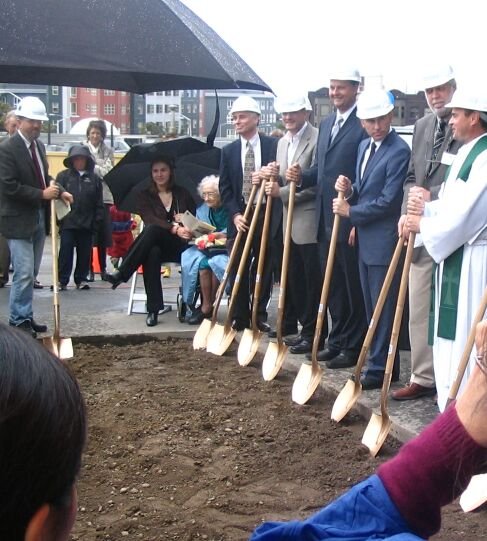
The congregation bade farewell to Fifth & Marion after a century, writing messages on the Education Wing’s walls before its demolition. Worship moved to the Seattle Children’s Theatre, and in September, ground was broken for the new sanctuary at 180 Denny Way.
2009
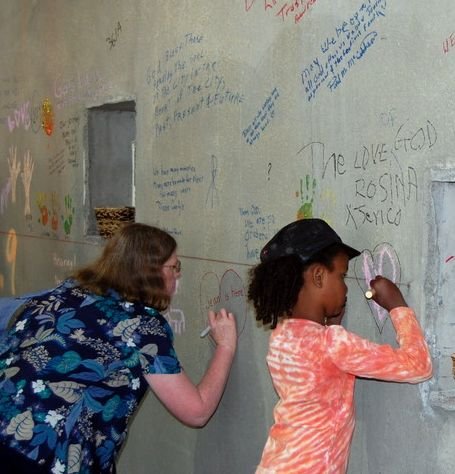
While the new sanctuary, Blaine Center, and parking garage took shape, the congregation worshiped at the Children’s Theatre and kept Shared Breakfasts going in partnership with Sacred Heart Catholic Church. In June, the congregation gathered to sign the walls of its rising building.
2010
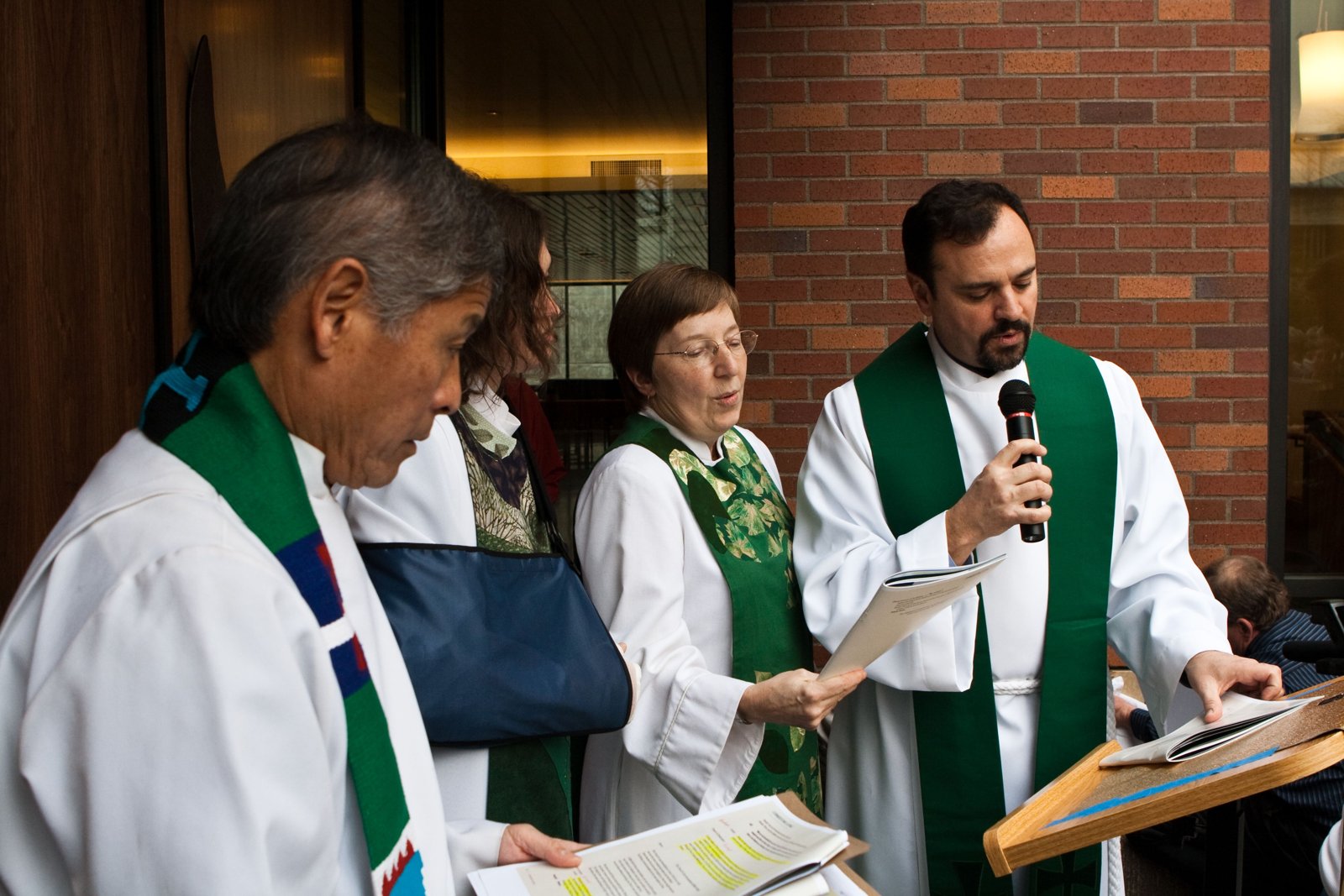
On January 31, the congregation processed from the Seattle Children’s Theatre to its new home, laid the time capsule in the cornerstone, and dedicated the new sanctuary with Bishop Hagiya, Rev. Pat Simpson, and senior pastor Rev. Sandy Brown. The 60-bed Blaine Center for homeless men opened soon after, and stained glass windows reflecting a New Heaven and a New Earth were installed in the sanctuary and narthex.
2012
Church volunteers took the lead among Seattle congregations in the campaign for Referendum 74, which affirmed marriage equality in Washington at the ballot box that November. The first same-sex wedding at First Church was celebrated the following year.
2013
Shared Breakfasts grew to every Sunday — roughly 60 dozen eggs, 400 biscuits, six gallons of gravy, and 40 pounds of sausage each week, funded entirely by donations. Saturday morning Pax Christi Yoga began in Fellowship Hall, and pastor Sandy Brown received Washington CeaseFire’s Citizen Activist of the Year Award for his work to end gun violence.
2014
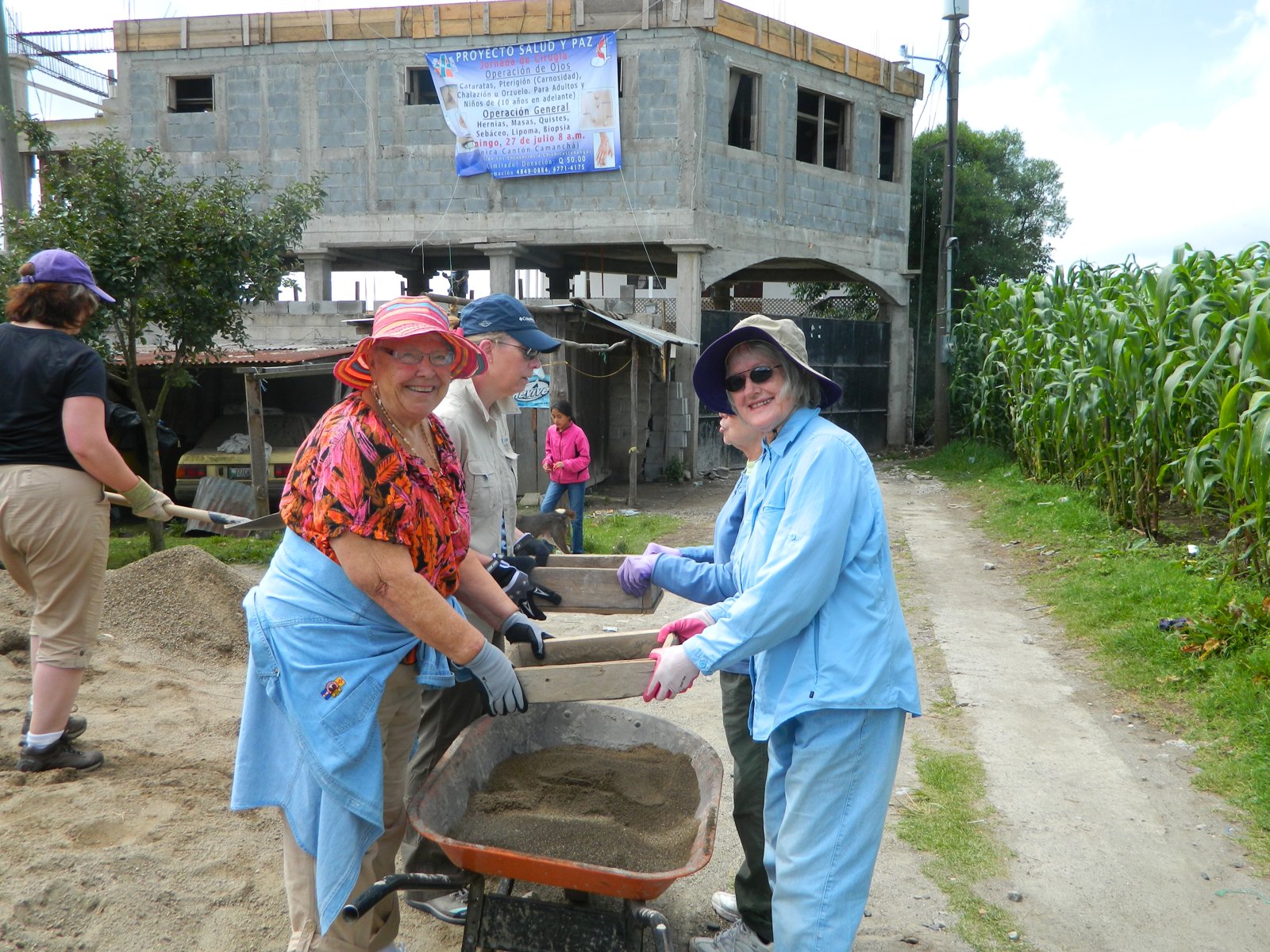
Members worked with the Washington Alliance for Gun Responsibility to pass Initiative 594, bringing universal background checks to gun sales statewide. The Seeds to Branches campaign opened the door to international mission, sending 29 volunteers to Project Salud y Paz clinics in Guatemala in 2014 and 2017.
2017
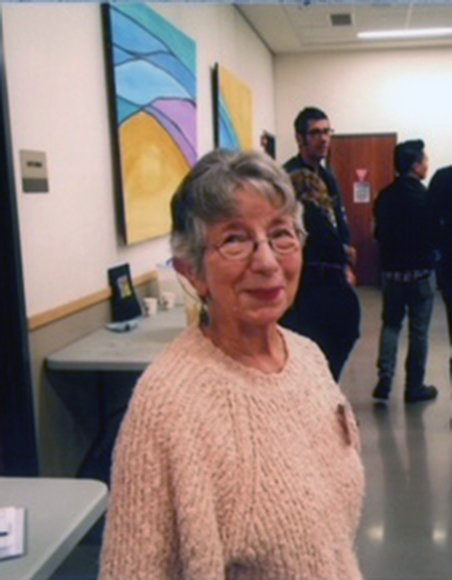
The congregation celebrated 20 years of Shared Breakfasts and honored Jean Ferguson, “The Queen of Shared Breakfast,” featured on KOMO-TV’s “Eric’s Heroes” and recipient of the Annual Conference’s Martin Luther King Jr. Award. The church also launched its Greening Initiative, expressing love for God through reverence for the Earth.
2018
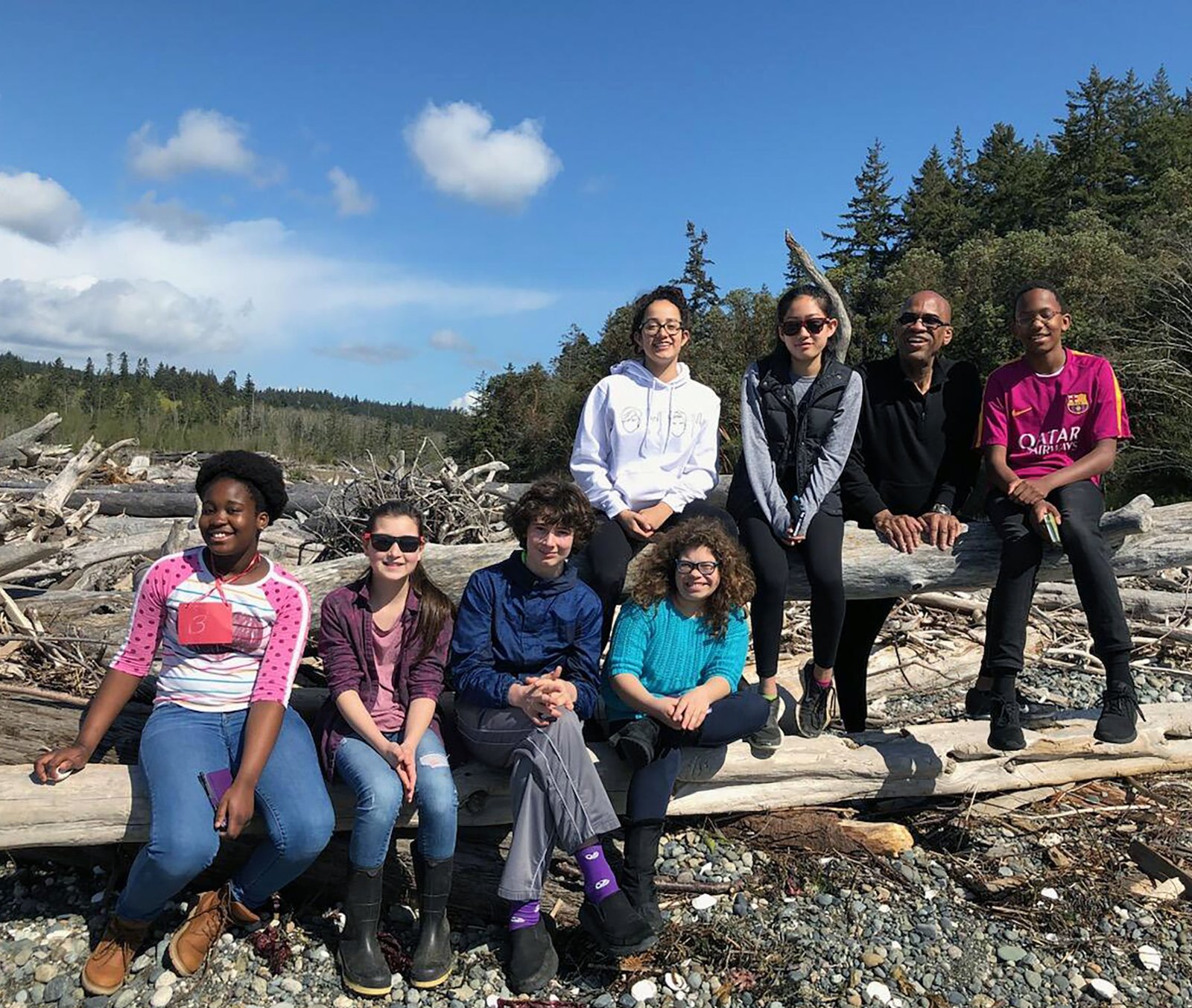
The congregation approved Vision 2021 — strengthening spiritual culture, expanding social justice work, and broadening community engagement. Education classes, Sunday lunch-and-learns, and church retreats deepened relationships across the congregation.
2019
First Church’s Administrative Council unanimously reaffirmed its commitment to the inclusion of LGBTQIA+ persons “in all dimensions of the life of our congregation and of the wider United Methodist Church,” in response to the General Conference vote rejecting easier paths for LGBTQIA+ clergy and same-sex marriage. The church also hosted panels for the 2019 Womxn’s March and built a Pride and Faith partnership with the New Horizons youth shelter.
2020
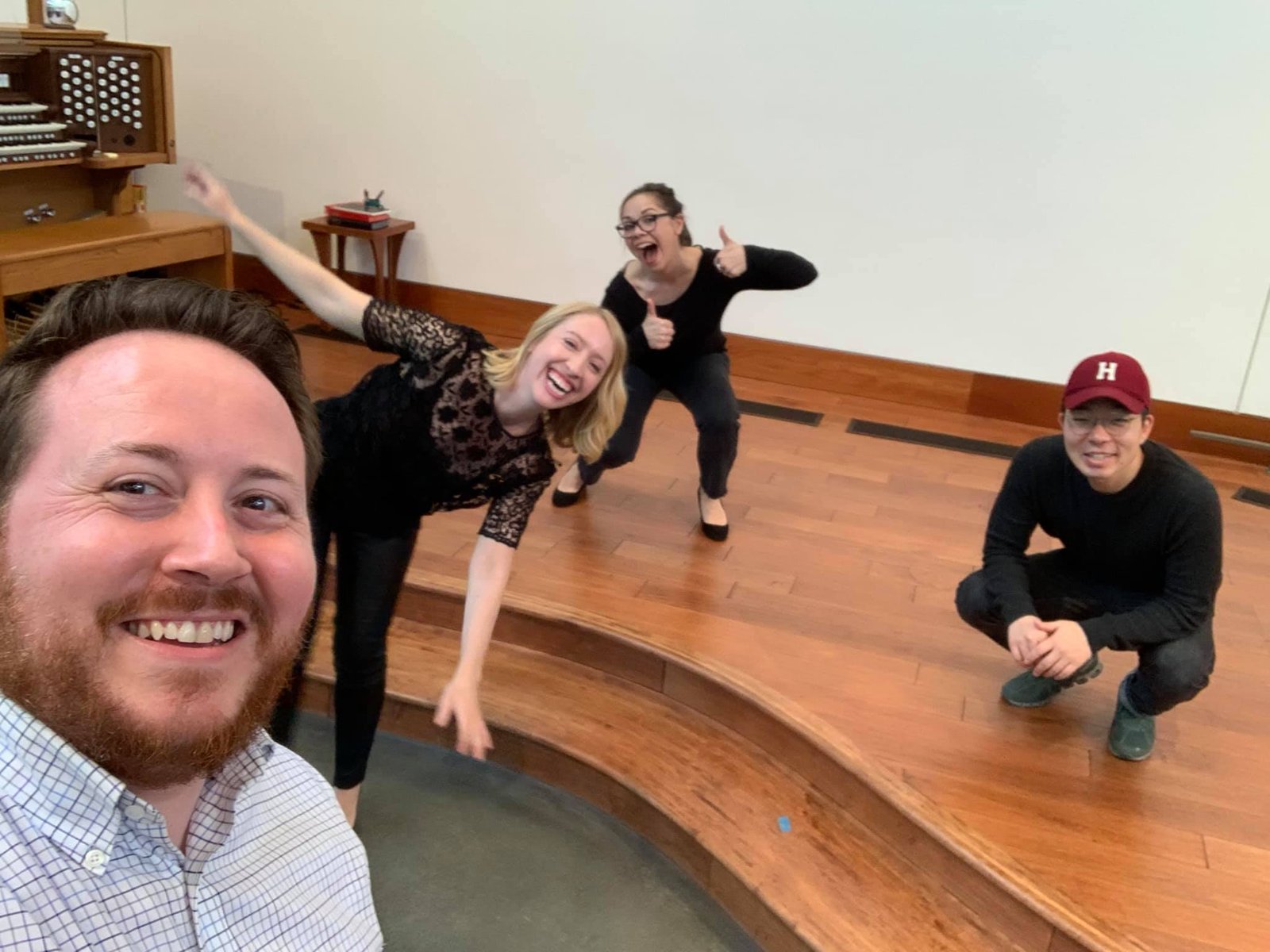
Three days after the pandemic shutdown was announced, tech-savvy leaders and staff produced First Church’s first all-online worship service. The choir recorded anthems at home to be synchronized for Sunday mornings, Holy Communion and community groups moved to Zoom, the Blessing of the Animals moved to the top of the parking garage, and Rev. Yvonne Agduyeng was appointed associate pastor amid it all.
2021
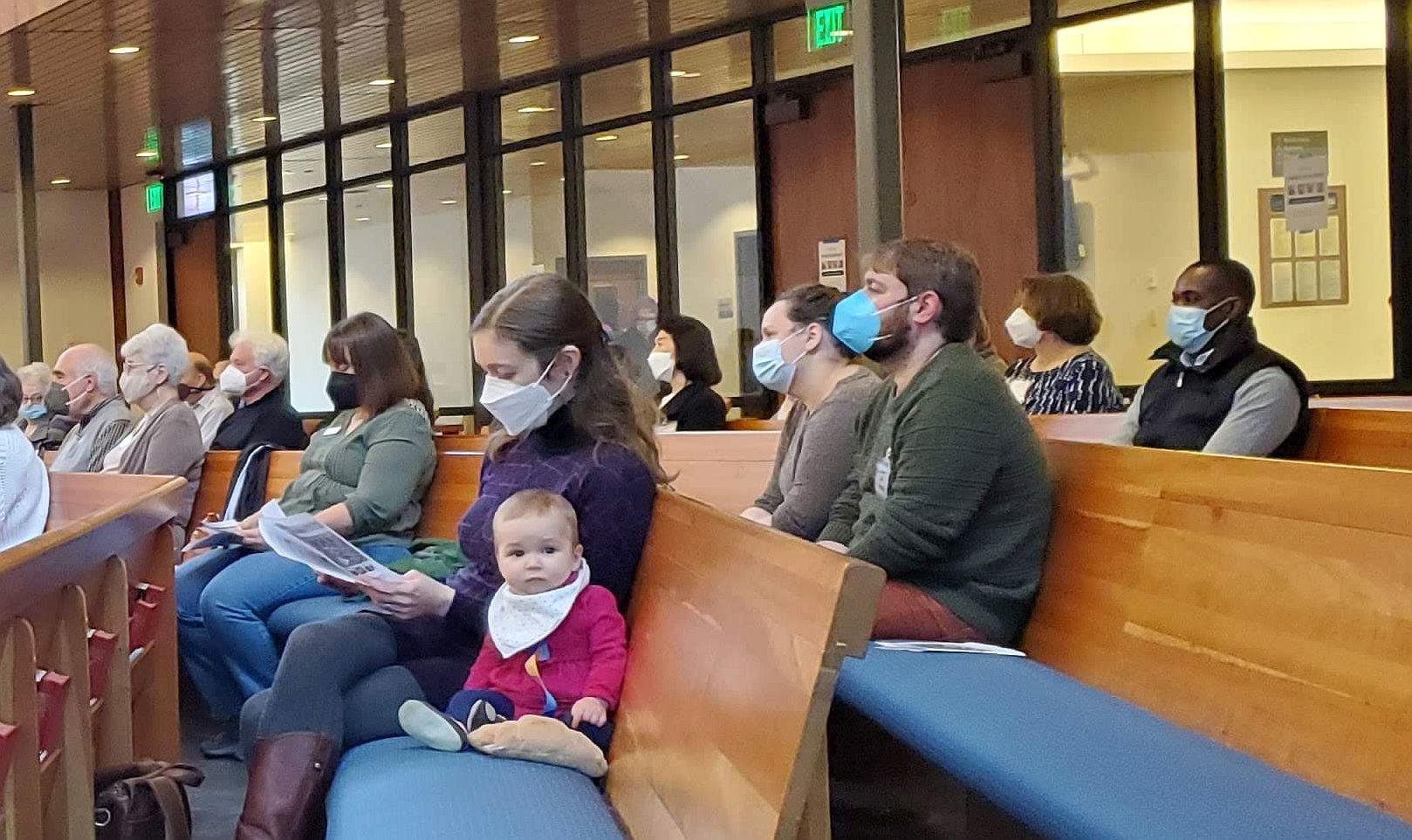
After fifteen months, in-person worship resumed on July 18, 2021 — in hybrid form, gathered in the sanctuary and online, as it continues today.
2023
In First Church’s 170th year, members of the congregation marched in a National Day of Action protesting banks that finance fossil fuels — the Greening Initiative in action — and the congregation’s Love, Grow, Serve community groups, from Pub Theology to the Prayer Shawl Ministry, carried its life forward into a new generation.
Drawn from the First Church History Wall, researched and assembled by church historians and volunteers. Additions and corrections are welcome — contact the church office.